
The world is now looking East. The SCO Development Strategy until 2035 for a New Multipolar World Order and Reform of the UN and the International Financial Architecture. The West is moving towards supremacist radicalisation and difficulty competing in the free market. The role of the Belt and Road Initiative, often overlooked by mainstream analysts, and that of Iran, Türkiye, and, in particular, India, the world’s largest democracy.
by Glauco D’Agostino
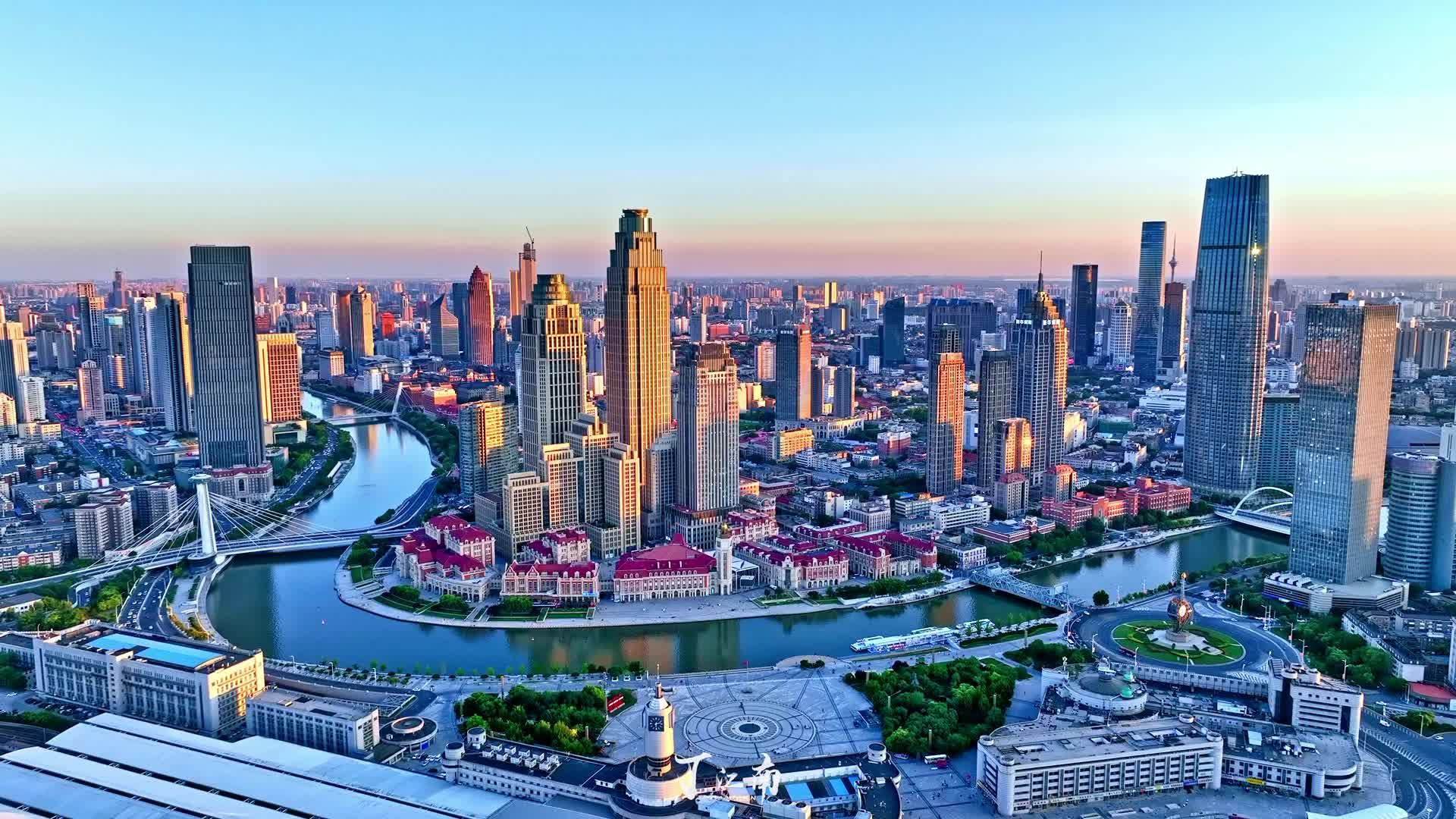
The Chinese port city of Tiānjīn
New Multipolar World Order and UN Reform
If anyone still had any doubts about the intentions of the Shanghai Cooperation Organisation (SCO) at the Tianjin Summit straddling August and September, it was because they hadn’t paid attention to what had been communicated for years at previous summit meetings and what the heads of state and government of member countries themselves had declared; as if those press releases and declarations implied wishful or manifestly unfeasible aims.
The Chinese-presided Summit reaffirmed some of the goals already formulated within the BRICS since their inception and subsequently shared by the combined BRICS and SCO membership, in line with the 2017 “New Type of Security Partnership” by Chinese President Xi Jinping. New international relations beyond conflicts among civilisations and stronger regional cooperation translate into new global governance, multilateralism, and contributions to the development of the Global South.
What, then, is the new development emerging from the Tianjin Summit? In my opinion, the turning point lies in the method, that is, the significant shift from a phase of simple resolutions to a long-term strategic commitment, underscored by the joint endorsement of the SCO Development Strategy until 2035. The first paragraph of the Tianjin Declaration by the Organisation’s ten Heads of State opens with an observation and a hope: “The world is undergoing profound historical changes that affect all spheres of political, socio-economic and social relations. There is a growing desire to create a more just, equitable and representative multipolar world order that opens up new prospects for the development of states and mutually beneficial international cooperation.” And it adds: “[SCO Member States] consider it necessary to adapt the UN to modern political and economic realities by carrying out a balanced reform to ensure the representation of developing countries in the governing bodies of the UN.”[1] Therefore, a new multipolar world order and a more representative reform of the UN are the cornerstones of this commitment undertaken by the SCO countries for the next ten years.
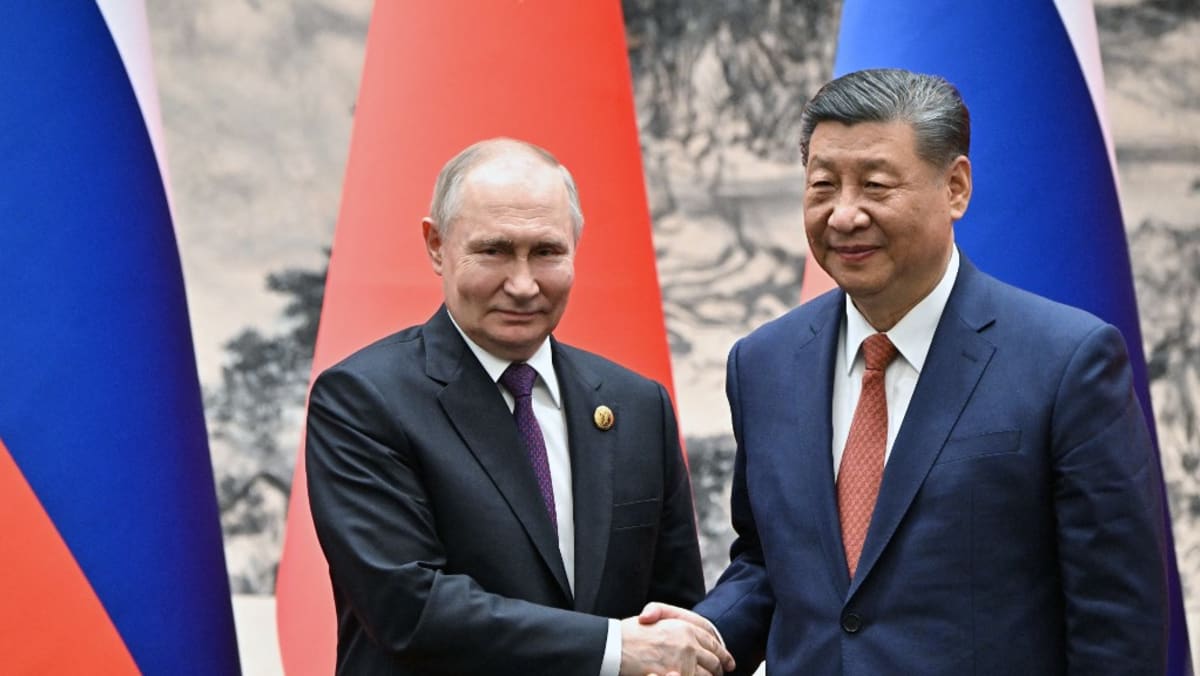
All this is the fruit of the “Spirit of Shànghăi,” which stems from the SCO’s founding in 2001 as a political, economic, and security organisation and is based on mutual trust and benefit, equality, consultation, respect for the diversity of civilisations, and the pursuit of common development.[2] Hence, the emphasis President Xi Jinping placed on promoting “inclusiveness and mutual learning between civilizations”.[3] A not-so-veiled warning against the hegemony of the Western world, towards which a necessary opposition must be expressed, echoed in the words of President Putin when he refers to “outdated Eurocentric and Euro-Atlantic models”.[4]
This taboo topic is causing Western institutions and geopolitical analysts to lose their bearings, severely impacting communication and accurate reporting reliability on the subject, especially if one even questions the prospect of a decline in the hegemony that Europe and the U.S. exerted over the entire planet for at least the last two centuries, and predominantly Washington alone in the latest century. Yet, there is no shortage of experts warning of an ongoing phenomenon that has been ignored and of a lack of awareness of historical changes that have been unfolding for decades. Among them, John Lough, associate fellow at the Russia and Eurasia program at Chatham House in London, explicitly states: “The established dominance of the Western alliance in international affairs is receding and [many countries] see the opportunity to start to, in a serious way, re-engineer the international system”.[5]
The other underestimated topic is Eurasia, which, currently, is not only addressed by Putin when he identifies the Eurasian continent as the recipient of “a new system of stability, security and peaceful development”, but also the Tianjin Declaration deems it important “to create a broad, open, mutually beneficial and equitable space for interaction in Eurasia,” reaffirming the initiative to establish a Greater Eurasian Partnership.
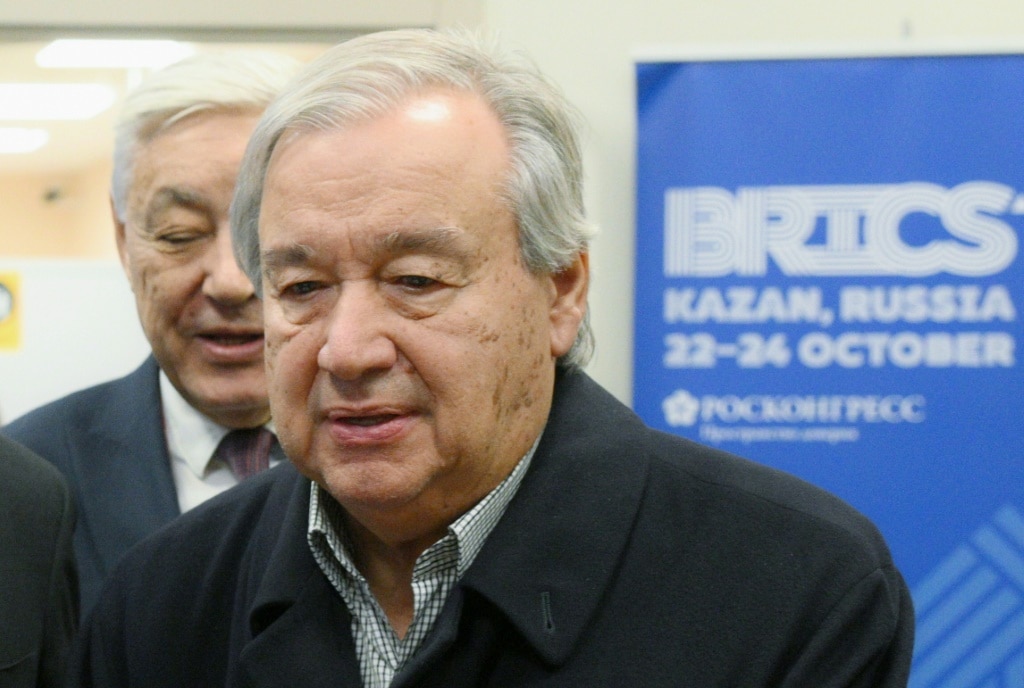
António Guterres, Secretary-General of the United Nations
Following this line, on an economic level, the SCO member states condemn unilateral coercive measures, which violate the UN Charter and international law, the World Trade Organisation’s principles, and the UN Sustainable Development Goals. The hint is clearly to the instrumental use of restrictive and discriminatory economic expedients against third countries to achieve other goals, particularly political ones.
The paradox is that what China is accused of — that is, diplomatic pressure on developing countries as a form of financial blackmail over debt to influence approval of Beijing’s expansionist policies — has become economic and political doctrine in the West for some time now, where unilaterally sanctions, embargoes, asset freezes, and tariffs of all kinds clearly indicate a difficulty competing on the free market for goods and services. According to an analysis by The Washington Post in 2024, the U.S. alone maintains sanctions on 60% of low-income countries,[6] and it enforces a total embargo on four of them (the Islamic Republic of Iran, Russia, China, and North Korea). Other allies who share its values follow suit. Is this the same West that claims to advocate and export free trade? Maybe an autocratic communist republic is ready to lecture on the subject, at least in doctrine.[7] Times are changing…
New Global Governance and Financial Market Reform
Regarding global governance, in his September 1st speech at the Tianjin Summit, Xi Jinping repeatedly reiterated the importance of focusing on international cooperation and pursuing integration among countries to avoid systemic disintegration.[8] To this end, he proposed the Global Governance Initiative (GGI),[9] which complements three other initiatives he presented on development, security, and multipolarity over the past three years.
The GGI is based on five fundamental principles:
- equal sovereignty, to ensure that all countries, regardless of their circumstances, are equal participants, decision-makers, and beneficiaries of global governance;
- respect for the international rule of law, for an application that avoids the imposition of domestic acts on other countries and double standards;
- multilateralism, to strengthen solidarity and coordination, firmly safeguarding the UN status and authority in its key and irreplaceable role in global governance;
- people-centred approach, to reform and improve the global governance system, address humanity’s common challenges, bridge the North-South divide, and safeguard the common interests of all countries;
- concrete actions, to be implemented with a systematic and holistic approach to resource mobilisation.
The Global Times, the Chinese tabloid owned by the People’s Daily Press under the control of the Central Committee of the Communist Party of China, remarks: “Against the backdrop of certain Western powers deliberately undermining multilateral mechanisms, the SCO demonstrates that multilateralism is not outdated; rather, it has become the SCO’s ‘institutional competitiveness’.”[10] It can be considered the gist and, at the same time, the authentic voice of the national leadership sitting in Beijing.
Xi says: “China supports the SCO in expanding cooperation with other multilateral institutions, such as the U.N., ASEAN, the Eurasian Economic Union, and the Conference on Interaction and Confidence Building Measures in Asia, to jointly uphold the international economic and trade order and improve global and regional governance.” The Chinese President’s attention to citing those geopolitical diplomatic tools that project the Asian giant into geographic areas previously closed off by a unipolar world order is evident. As I already recalled in an interview of mine in 2023, “All Chinese official documents that have an impact on geopolitics are based on three fundamental concepts just opposite to the ideological Western geopolitics:
- Pursuit of a multipolar global order;
- Respect for people’s cultural and institutional identities and expressions;
- Thematic partnerships rather than alliances resulting in loyalty obligations and political conditioning.”[11]
It’s worth remembering that ASEAN is a free trade area covering ten Southeast Asian countries with a combined GDP of US$4 trillion. And, politically, the Eurasian Economic Union is chaired in 2025 by the controversial Belarusian President Alexander Lukashenko, who also attended the SCO Summit in Tianjin.

It is also natural and legitimate that the SCO, the largest regional organisation in the world by area and population, including the three Asian BRICS members, has similar ambitions, given its combined economic output of nearly US$30 trillion and 23% of global GDP. Born as an aggregation of states centred around China and the former Soviet Union’s Central Asia, the organisation has gradually expanded to include Pakistan, India, the Islamic Republic of Iran, and Belarus. But the network of 17 partner states is much larger, ranging from Azerbaijan to Armenia, from Qatar to Saudi Arabia and the United Arab Emirates, including 8 states with a Muslim majority population and the addition of two other countries with observer status (Bangladesh and Algeria).
This picture highlights the SCO’s unifying capacity, considering that Pakistan and India coexist within this overall grouping, having been pitted against each other by the decades-long dispute over Kashmir; the Islamic Republic of Iran and Türkiye, whose geopolitical rivalry has historical roots; Azerbaijan and Armenia, two countries in conflict that signed a first peace agreement on August 8th; and Qatar and the major Gulf countries, engaged in ongoing disputes within the Gulf Cooperation Council. It appears that the SCO’s spirit prevails, with a focus on seeking peace and cooperation, at least regionally.
Regional Cooperation and Neighbourhood Diplomacy
Regional cooperation encompasses the shared aspiration to modernise the infrastructure network, particularly through the Belt and Road Initiative. Examples include the newly inaugurated Gwadar International Airport in Pakistan’s Balochistan,[12] part of the China-Pakistan Economic Corridor, an alternative for Chinese energy imports from the Middle East currently transiting the Strait of Malacca;[13] the ongoing construction of the Kashgar-Andijan railway line, which will connect China and Uzbekistan via Kyrgyzstan;[14] and the Sanjen Khola hydroelectric plant in Nepal, which began operating last April.[15]
Regional policy options are well-detailed in the Tianjin Declaration. We extract some key points (Russian Federation, “Tianjin Declaration,” cit.):
- Central Asia is the core of the SCO, as defined at the International Conference held last June in Dushanbe, Tajikistan;
- Israel’s and the U.S. military strikes against the Islamic Republic of Iran last June are a gross violation of the principles and norms of international law and the UN Charter, as well as an infringement on the sovereignty of the Islamic Republic of Iran;
- UN Security Council Resolution 2231 (2015), which approved the JCPOA on Iran’s nuclear program, is binding and must be implemented in full in accordance with its provisions;
- Condemnation of the actions that have led to numerous casualties among the civilian population and a catastrophic humanitarian situation in the Gaza Strip;
- Readiness to support the efforts of the international community to ensure peace and development in Afghanistan;
- Support for China’s Belt and Road Initiative (BRI) by all interested members;
- Confirmation of the initiative to establish a Greater Eurasian Partnership and readiness to develop dialogue with the Eurasian Economic Union, ASEAN, and other interested states and multilateral associations.
There is no reference to the war in Ukraine, but this is understandable, given the full involvement of one of the SCO’s major founding countries in the conflict.
As for the other large Asian country and the true driving force behind the SCO’s geopolitical strategy, China has always prioritised neighbourhood diplomacy. Xi says: “We were the first to set up a military confidence-building mechanism in our border areas, turning our extensive borders into a bond of friendship, mutual trust and cooperation” (CGTN, 2025, cit.), referring to the 2001 Treaty of Good-Neighborly Relations and Friendly Cooperation between the People’s Republic of China and the Russian Federation and citing in his Tianjin speech the same type of agreement signed by the SCO in 2007 in Bishkek.[16]
“China will establish three major platforms for China-SCO cooperation in energy, green industry, and the digital economy,” the President goes on. But recently, Beijing’s collaboration with Asian countries has also expanded to include the launch of “industrial parks,” such as the one in Pengsheng, Uzbekistan, the largest non-energy Chinese cooperation project in the SCO region;[17] the Sino-Russian centre for trade and economic cooperation based in Shenyang, a city in northeastern China that plays a strategic role in the Belt and Road Initiative;[18] and the “Great Stone” Industrial Park in Minsk, the result of Sino-Belarusian cooperation.[19]
Mutual solidarity was expressed above all during the numerous bilateral meetings that served as a backdrop to the Tianjin Summit and the statements of its representatives. The discussions regarding three key countries in Asian politics, which Beijing and Moscow must closely monitor, are full of food for thought: the Islamic Republic of Iran, Türkiye, and, in particular, India.
Esmaeil Baghaei Hamaneh, spokesperson for the Iranian Ministry of Foreign Affairs, described the SCO as an effective platform for cooperation in the Global South (CGTN, 2025, cit.). The Islamic Republic has long embraced this line of conduct, especially since “the Global South has begun building its own international organisations, and multilateral diplomacy gradually broke free from Western dominance,”[20] according to Seyed Mohammad-Kazem Sajjadpour, Director of the Tehrān-based Institute for Political and International Studies.
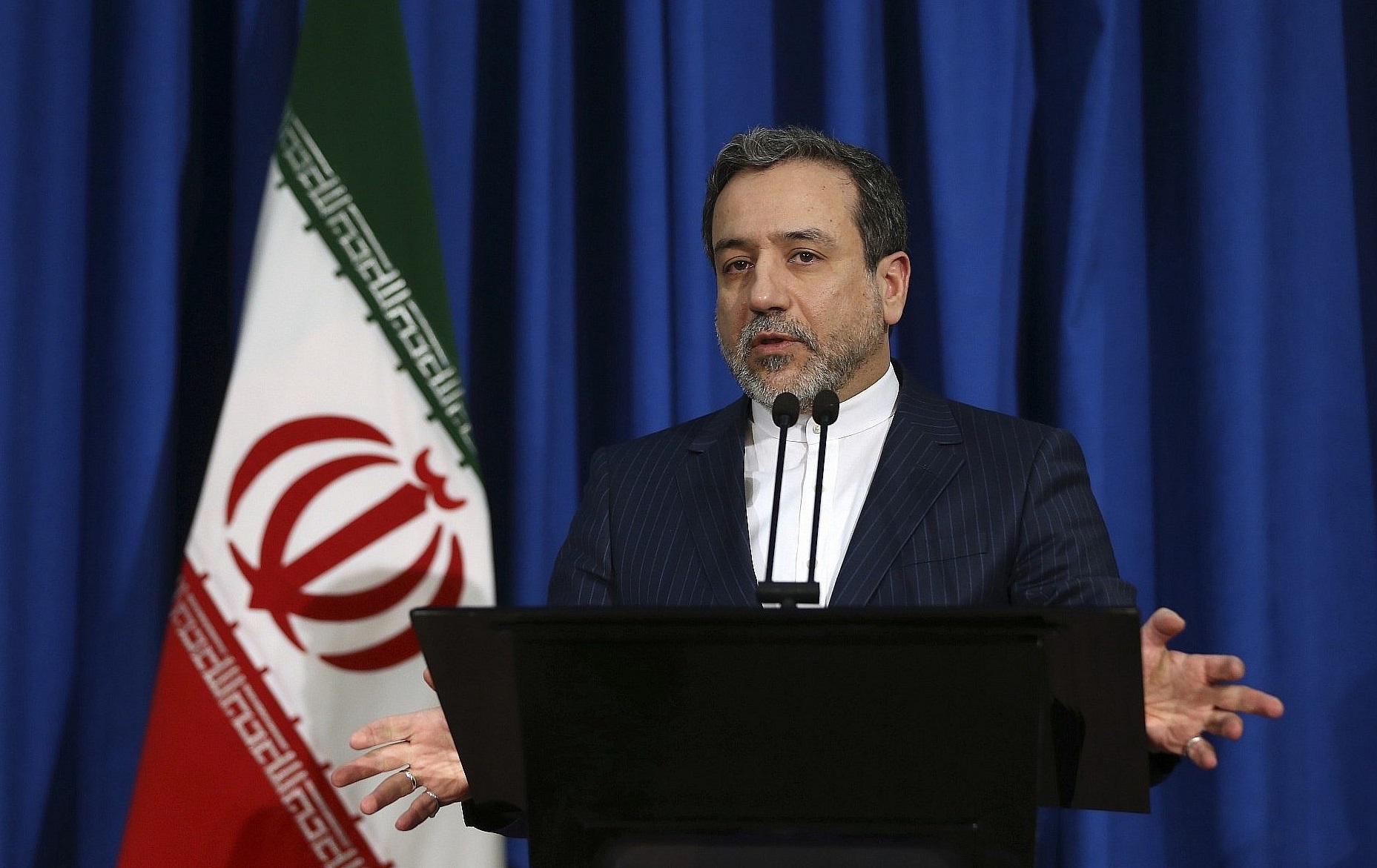
Seyed ʿAbbās-e ʿArāqčī, Minister of Foreign Affairs of the Islamic Republic of Iran
This confirms Iran as an influential regional powerhouse that has chosen for 46 years now not to be politically dependent on the major world powers. Indeed, its existing geopolitical focus on the East was accentuated by the U.S. unilateral withdrawal from the JCPOA.[21] On the other hand, Beijing, as the largest buyer of Saudi oil that maintains excellent trade relations with the Emirates and Israel, appreciates Iran’s bulwark policy against Washington’s geopolitical encroachment in the Middle East.
Today, Iran, with its continental and maritime capabilities of accommodating traffic from Central Asia and the Indo-Pacific, channelling it toward the Caucasus, the Mediterranean, the Sahel, and the Horn of Africa, is looking with great openness to the Belt and Road Initiative and the prospects it opens up to the nation as a whole as a transport hub serving the former Soviet republics in the region and Afghanistan itself, all landlocked countries.
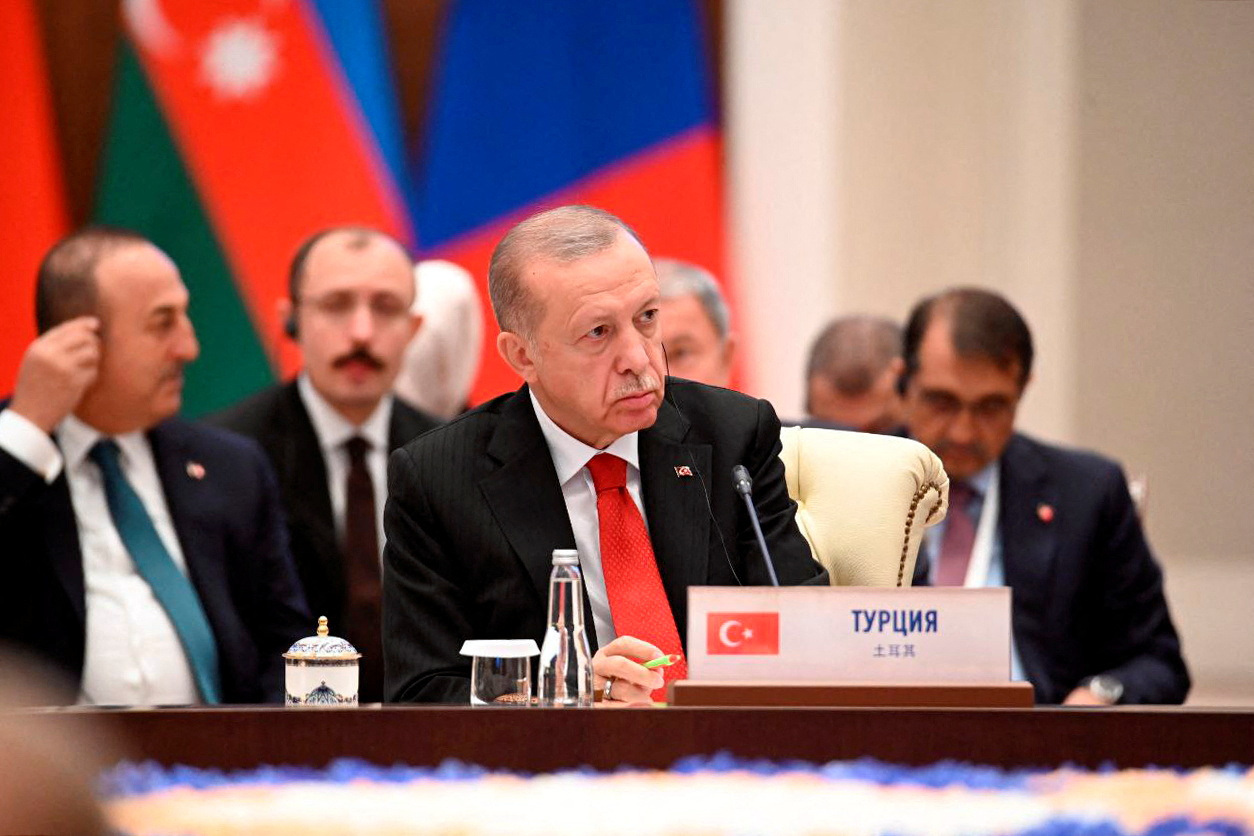
Turkish President Recep Tayyip Erdoğan was very active in meetings.[22] He saw his Iranian counterpart Mas’ūd Pezeshkian, reassuring him that cooperation between the two countries, particularly in the energy sector, serves their common interests. Türkiye and Iran are included in the China-Central Asia-West Asia Economic Corridor, which is part of the Belt and Road Initiative,[23] and, as member states of the agreement on the 7,200-km multimodal North-South International Transport Corridor,[24] are intended to convey goods and commodities from India and Central Asia to Europe, avoiding the difficulties and transport times caused by the Bāb al-Mandeb and Suez Straits.
Aside from the Tehrān and Ankara soft power in Iraqi Kurdistan,[25] it’s also important to remember the Azerbaijani issue, which complicates relations between their respective diplomatic services, given that in pro-Turkish Azerbaijan, people are 90% Shiite faithful, and in Shiite Iran, between 18 and 30% of the entire Iranian population is ethnic Azeri.[26] Erdoğan then met with both Azerbaijani President Ilham Əliyev and Armenian Prime Minister Nikol Pashinyan. Welcoming the progress in the peace process between the two countries, he informed both that steps are underway to strengthen cooperation with Armenia.
In his discussions with Russian President Vladimir Putin, the Turkish President emphasised that permanent stability in the Caucasus would benefit both Türkiye and Russia and expressed his belief that the Istanbul negotiations on the conflict in Ukraine could contribute to the peace process. The long-standing understanding between Moscow and Ankara could significantly enhance their mutual potential for influence and attraction in the region, despite the difficulties in fine-tuning centuries-old incompletely resolved issues, such as Crimea and the Caucasus, Afghanistan and Central Asia.
The Turkic and Islamic cultural ascendancy over the populations of these lands has been a historical problem for Russia since the Tsarist era, evoking the pan-Turkism condemned and fought first by St. Petersburg and then Moscow. After the USSR’s dissolution, the acquisition of national independence and the Kremlin’s recourse to more or less composite alliances with some of these newly formed states emphasised the problem, thus reducing the interference rate not only in cultural, ethnic, and religious fields, but above all, NATO’s political one.
Only since the 2016 failed military coup in Türkiye, with the ambiguous behaviour of some White House members, has Erdoğan’s acumen allowed for an opening of trust towards Putin. For its part, the Kremlin understood that the razvorot na vostok, the turn to the East, was a necessary step and also a mirror image of Washington’s protectionist shift, which, although displaying a stern and bellicose face, leaves geopolitical spaces that will inevitably be filled by powers the White House considers competitors rather than partners.[27] Today, with Xi Jinping’s acquiescence, the SCO is accomplishing a geopolitical feat that would have been unthinkable a few years ago, to the point of enabling the intensification of relations between Pakistan and the Turkish Republic of Northern Cyprus, as Erdoğan himself acknowledged in his meeting with Pakistani Prime Minister Shehbaz Sharif.
Received by the Chinese President, Erdoğan immediately declared Türkiye’s support for the “One China” policy and called for the alignment of the Turkish-led East-West Trans-Caspian Intermediate Corridor, which does not pass through Iran, with the China-Central Asia-West Asia Economic Corridor of the Belt and Road Initiative.
In addition to meetings with the Presidents of the Islamic Republic of Iran, Uzbekistan and Tajikistan, and the Prime Ministers of Pakistan, Vietnam and Nepal, Vladimir Putin held talks with Indian President Narendra Modi (Russian Federation, “SCO Council Meeting”, 2025, cit.), who returned in person to an SCO Summit after years of absence.
Much of the Asia-Pacific geopolitical game appears to revolve around the role of India, the world’s largest democracy, as the authoritative American magazine Foreign Policy reminds us. At the Kazan Summit, Modi specified that the BRICS+ aggregation “is not anti-Western; it is simply non-Western,”[28] presenting them as an alternative to the G7 governance model. This clarification speaks volumes about India’s stance in the geopolitical landscape. Indeed, India is already a member of the SCO and the Russo-Chinese-led BRICS and, along with the U.S., Japan, and Australia, is also an integral part of the Quadrilateral Security Dialogue (QUAD) with a focus on maritime cooperation. However, India intends to maintain its geostrategic independence, not necessarily tied to Western interests, demonstrating scepticism even towards multilateral trade agreements led by Japan, but also ASEAN or the Belt and Road Initiative inland, despite the latter establishing a mechanism for trade and development agreements that is completely free of constraints and ideological bias.
While condemning the Russian invasion of Ukraine, New Delhī broke away from the prevailing mainstream, not joining sanctions against Russia, has announced the possibility of using the Chinese rénmínbì for its oil imports, and its willingness to promote the use of local currencies.[29] This time, Modi has not succumbed to the trap of oil sanctions against third parties, as done with Iran under pressure from Washington.
While Beijing remains concerned about Russian military cooperation with Delhī, China and India are now the world’s two largest buyers of Russian oil and coal, with China also the second-largest buyer of Russian gas and petroleum products (Kottasová, 2025). President Trump’s protectionist policy, which imposed 50% tariffs on India to penalise purchases of Russian oil, is not only having no effect, but will increasingly push India toward Asian geopolitical shores that are perhaps more suited to its purposes.[30]
Final remarks
An interstate coalition or military alliance can lose its global leadership due to its inadequacies or the merits of its opponents in interpreting the world’s needs during times of historical transition. In the case of the West and its armed wing, NATO, both hypotheses are valid.
The accusations of unilateralism and continued violations of international law levelled at the West by the Asian world as a whole correspond to a reality that, for 35 years, has undergone a discriminatory regression at the expense of a large part of the world’s population. The perception of having achieved omnipotence rather than guidance towards a promised peaceful coexistence has led the West to a radicalisation of its ideological principles and a search for conflict with other civilisations, considering its own superiority a value.
The State of Israel, for example, bases its regional supremacy on this concept. Deemed part of the democratic Western world and progressing towards apartheid, it has no qualms about carrying out genocide against the Palestinian population and, in a manner clearly tinged with state terrorism, continuously bombs seven states, some of which are not even neighbouring, such as the Islamic Republic of Iran, Yemen, and, last but not least, Qatar, which hosts the U.S. Combat Air Operations Center for the Middle East.
Thus, the West’s decline can be traced precisely to a values level: on one side, the lack of consideration for the identities and cultural and institutional expressions of “non-conformist” peoples; and on the other one, the failure to redistribute the fruits of international cooperation, which has been carried out primarily in the military sphere and never aimed at true economic and social integration of cooperating peoples. These are the exact opposite values embodied in the Tianjin Declaration and all official Chinese documents that impact geopolitics, when they speak of multilateralism and contribute to the development of the Global South.
A geopolitics based on the use of force, ethically illegitimate and not always correct even under international law, is evidently insufficient to resolve the problems of 21st-century people’s coexistence, the vast majority of whom do not live in the West and do not speak English. Beijing has understood it perfectly. Washington is struggling while trusting in the magic of a supremacist narrative that has gradually lost credibility. China’s alleged aggression against the entire world is just that “institutional competitiveness” Washington is no longer able to sustain. Hence, Xi’s invitation to “countries with relevant capabilities to take part in the International Lunar Research Station project” (Xinhua, “Xinhua Headlines”, 2025).
The worst international crises since the fall of the Berlin Wall occurred in the Islamic world because the West identified that world as the adversary to be struck, without any global power being able to assume its defence. The resulting military operations were part of the White House’s counterterrorism strategy on behalf of all humanity, and no country among the UN Security Council permanent members has a predominantly Muslim population.
The instrument was the destabilisation of that world through wars of invasion (Somalia, Afghanistan, Iraq, Libya), coups (Pakistan, Egypt, Sudan, Mali), induction of civil wars (Yemen, Syria, the former Yugoslavia), and regime-change (colour revolutions in Kyrgyzstan, Georgia, Yanukovič’s Ukraine). The latter was invoked in vain for Lebanon and the Āyatollāh’s Islamic Republic of Iran, as well as for all those countries that supposedly threatened Washington’s interests (North Korea, Venezuela). After all, the suffering concerned distant lands and did not interrupt the atmosphere of “fiesta” that the West evidently includes among the civil rights to be strenuously defended.
By contrast, Beijing, Moscow, the Shanghai Cooperation Organisation and the BRICS now speak a common language in terms of global governance. They do not think of opposing alliances based on ideologies or common ethnic and religious roots, but rather, open, flexible, and non-imposed partnerships allowing for the exchange of ideas, programs, and economic, social, and even cultural projects. Thus, while the West lists Afghanistan’s invasion and Iran’s recent bombing among its achievements, the BRICS and the SCO welcome Tehrān as a full member and Kabul as a partner. And still within the Islamic sphere, 12 Muslim-majority countries have now joined the two organisations in various capacities, including U.S. good friends, such as Turkey (a NATO member), Egypt, the UAE, and Indonesia.
The soul is precisely that “Spirit of Shànghăi” which has informed Chinese foreign policy and the entire SCO for two decades. It’s a shame that an increasingly blind and extremist West has underestimated it throughout this time and classified it as an ideological opponent simply because it comes from a non-democratic country. Perhaps the democracy-authoritarianism antagonism, which is a domestic institutional issue, is no longer sufficient for a correct interpretation and response to the needs of dialogue between peoples, which is a question of international politics. Poor old West!
The reform of the UN and global financial markets, currently led by Washington-based bodies, is now a long-term target the Shanghai Cooperation Organisation intends to achieve through the SCO Development Strategy until 2035. And while Xi Jinping is working towards the 2049 horizon, Europe is content with a short-term agenda that its transatlantic allies suggest. The proposals put forward in Tianjin confidently look to the future security of the entire world, before it’s too late. The White House and its rapacious oligarchies view them as a crime of lese-majesty, locking themselves into a defence of a privilege the international community no longer allows, due to the inadequate management of an order established in a past with features very different from those of the present. It’s a question of mentality, perhaps also due to varying depths of cultural bedrocks between Beijing and Washington.
The world is now looking East also because history, cultures, and religions of the world, while some distinctions may be discernible, largely originate from the East. Europe and Israel, its cynical ally, should be aware of it. Saudi Arabia and the Arab world are still hesitating, but for Iran, India, and perhaps the entire ASEAN, this is a turning point they are taking note of!
REFERENCES
Acar, Elif and Solmaz, Fatma Zehra. “Turkish President Erdogan holds bilateral meetings with world leaders at SCO summit in China,” September 1st, 2025, Anadolu Ajansı. https://www.aa.com.tr/en/asia-pacific/turkish-president-erdogan-holds-bilateral-meetings-with-world-leaders-at-sco-summit-in-china/3675648#
ANI. “Putin echoes PM Modi’s stance on BRICS, says ‘it’s not anti-Western; it’s just non-Western’,” October 18th, 2024. https://www.aninews.in/news/world/asia/putin-echoes-pm-modis-stance-on-brics-says-its-not-anti-western-its-just-non-western20241018213921/
Belarus, Official Website of the Republic of Belarus. “Great Stone Industrial Park,” n.d. https://www.belarus.by/en/business/business-environment/industrial-park-great-stone.
CGTN. “China vows further development of SCO in pursuit of win-win results,” September 1st, 2025. https://news.cgtn.com/news/2025-09-01/President-Xi-Jinping-delivers-keynote-speech-at-SCO-Council-of-Heads-of-State-meeting-1Gj2qJBEW8U/p.html.
China-centralasia. “Peng Sheng Industrial park,” n.d. https://china-centralasia.org/en/project/146.
Chinalawinfo Co. “Treaty on Long-Term Good-Neighborliness, Friendship and Cooperation Between the Member States of the Shanghai Cooperation Organization,” n.d. https://lawinfochina.com/display.aspx?id=7859&lib=tax&SearchKeyword=&SearchCKeyword=
D’Agostino, Glauco. “The new Asian geopolitics in the wake of the Silk Road and Marco Polo’s feats,” February 10th, 2025, Geopolitica. Revistă de Geografie Politică, Geopolitică şi Geostrategie, nr. 105 (4/2024): (Bucureşti: Top Form). https://www.geopolitic.ro/2025/02/nr-4-105-2024-principiul-dominoului/
D’Agostino, Glauco. “China and U.S. Race in the Asia-Pacific for the Global Order,” October 30th, 2023,
CHINA AND U.S. RACE IN THE ASIA-PACIFIC FOR THE GLOBAL ORDER
D’Agostino, Glauco. “The Goal of Geopolitics is not Consensus (which is a Political Goal) but the Transfer of Knowledge and Methods,” October 27th, 2023, Geopolitica, nr. 100 (3/2023): (Bucureşti: Top Form). https://www.geopolitic.ro/2023/10/goal-geopolitics-not-consensus-political-goal-transfer-knowledge-methods/
D’Agostino, Glauco. “From the BRICS, a free market lesson to the West. A matter of style!” July 2nd, 2022.
From the BRICS, a free market lesson to the West. A matter of style!
D’Agostino, Glauco. “Tehrān towards Beijing and Moscow: strategic alliances and overcoming divergences,” February 1st, 2022, Geopolitica, nr. 92-93 (1/2022): (Bucureşti: Top Form), 256-278. https://www.geopolitic.ro/2022/01/infrastructuri-critice-emergente-riscuri-geopolitice/
D’Agostino, Glauco. “The Rise of Iran in the Middle East and the Alleged Shiite Crescent,” May 1st, 2020, Geopolitica, no. 83 (2/2020): (Bucureşti: Top Form), 69-80.
ORIENTUL MIJLOCIU EXTINS(II) – între revoltă și haos constructiv –
D’Agostino, Glauco. Tatarstan-Putin: A Crossed Challenge (London, UK: Glimmer Publishing, June 2018).
D’Agostino, Glauco. “Trump and Iran: the Lessons Coming from History,” April 15th, 2017.
D’Agostino, Glauco. “Azerbaijan: A Turkic-Shiite Identity Hanging on Oil,” March 1st, 2017, Geopolitica, nr. 68-69 (1/2017): (Bucureşti: Top Form). https://www.geopolitic.ro/2017/03/caucaz-reconciliere-si-reconstructie/
Global Times. “SCO Tianjin Summit showcases the charm of genuine multilateralism: Global Times editorial,” August 31st, 2025. https://www.globaltimes.cn/page/202508/1342236.shtml.
Kottasová, Ivana. “A parade and a summit in China underscore how European security will never be the same again,” September 4th, 2025. https://edition.cnn.com/2025/09/04/europe/china-sco-summit-parade-european-security-intl.
Luo, Wangshu. “Work begins on three critical tunnels of China-Kyrgyzstan-Uzbekistan Railway,” April 29th, 2025. https://www.chinadaily.com.cn/a/202504/29/WS6810e628a310a04af22bceab.html.
Rice, Dana. “An Overview of China’s Belt and Road Initiative and Its Development Since 2013,” in Securitization and Democracy in Eurasia, eds. A. Mihr, P. Sorbello, and Weiffen (Switzerland: Springer, Cham, 2023), 255-266. doi: 10.1007/978-3-031-16659-4_17 B.
Roche, Elizabeth. “India at the SCO Summit: One Platform, Multiple Messages”, September 2nd, 2025. https://thediplomat.com/2025/09/india-at-the-sco-summit-one-platform-multiple-messages/
Russian-Asian Union of Industrialists and Entrepreneurs. “Sino-Russian Industrial Park of Trade and Economic Cooperation in Shenyang, Liaoning,” July 22nd, 2024. https://raspp.ru/en/business_news/industrial-park-china/
Russian Federation, Presidential Executive Office. “SCO Heads of State Council Meeting,” September 1st, 2025. http://en.kremlin.ru/events/president/news/77891.
Russian Federation, Presidential Executive Office. “Tianjin Declaration of the Council of Heads of State of the Shanghai Cooperation Organisation,” September 1st, 2025. http://en.kremlin.ru/supplement/6376.
Sajjadpour, Seyed Mohammad-Kazem. “Iran and the Global South,” May 23rd, 2025, TDF, Tehran Dialogue Forum. https://www.tehrandf.com/en/Post/44/Iran_and_the_Global_South.
Sattar, Abdul. “Pakistan’s largest airport becomes operational, part of the Chinese Belt and Road Initiative,” January 20th, 2025. https://apnews.com/article/pakistan-china-funded-gwadar-airport-balochistan-50003e2c038e53841e8378c863c353ac.
The Washington Post. “How four U.S. presidents unleashed economic warfare across the globe,” 2024. https://www.washingtonpost.com/business/interactive/2024/us-sanction-countries-work/
Xinhua. “(SCO Tianjin Summit) Xinhua Headlines: Xi proposes Global Governance Initiative at largest-ever SCO summit,” September 2nd, 2025. https://english.news.cn/20250902/12e2109db4404d80a78c950dd4636a21/c.html.
Xinhua. “Full text of Xi Jinping’s speech at the ‘Shanghai Cooperation Organization Plus’ Meeting,” September 1st, 2025. https://www.scochina2025.org.cn/en/n3/2025/0901/c518818-20360666.html.
Xinhua. “China-built hydropower plant in Nepal put into operation,” April 10th, 2025. https://www.globaltimes.cn/page/202504/1331823.shtml.
Yin, He. “SCO summit in Tianjin to usher in a new era of cooperation,” August 29th, 2025, People’s Daily. https://en.people.cn/n3/2025/0829/c90000-20359093.html.
***
[1] All direct quotes on the Tianjin Declaration are taken from: Russian Federation, Presidential Executive Office, “Tianjin Declaration of the Council of Heads of State of the Shanghai Cooperation Organisation,” September 1st, 2025, http://en.kremlin.ru/supplement/6376.
[2] He Yin, “SCO summit in Tianjin to usher in a new era of cooperation,” August 29th, 2025, People’s Daily, https://en.people.cn/n3/2025/0829/c90000-20359093.html.
[3] CGTN, “China vows further development of SCO in pursuit of win-win results,” September 1st, 2025, https://news.cgtn.com/news/2025-09-01/President-Xi-Jinping-delivers-keynote-speech-at-SCO-Council-of-Heads-of-State-meeting-1Gj2qJBEW8U/p.html.
[4] Russian Federation, Presidential Executive Office, “SCO Heads of State Council Meeting,” September 1st, 2025, http://en.kremlin.ru/events/president/news/77891.
[5] Ivana Kottasová, “A parade and a summit in China underscore how European security will never be the same again,” September 4th, 2025, https://edition.cnn.com/2025/09/04/europe/china-sco-summit-parade-european-security-intl.
[6] The Washington Post, “How four U.S. presidents unleashed economic warfare across the globe,” 2024, https://www.washingtonpost.com/business/interactive/2024/us-sanction-countries-work/
[7] Glauco D’Agostino, “From the BRICS, a free market lesson to the West. A matter of style!” July 2nd, 2022, https://www.islamicworld.it/wp/from-the-brics-a-free-market-lesson-to-the-west/
[8] Xinhua, “(SCO Tianjin Summit) Xinhua Headlines: Xi proposes Global Governance Initiative at largest-ever SCO summit,” September 2nd, 2025, https://english.news.cn/20250902/12e2109db4404d80a78c950dd4636a21/c.html.
[9] Xinhua, “Full text of Xi Jinping’s speech at the ‘Shanghai Cooperation Organization Plus’ Meeting,” September 1st, 2025, https://www.scochina2025.org.cn/en/n3/2025/0901/c518818-20360666.html. All direct quotes from Xi Jinping’s speech at the SCO meeting are also from the same source, unless otherwise stated.
[10] Global Times, “SCO Tianjin Summit showcases the charm of genuine multilateralism: Global Times editorial”, August 31st, 2025, https://www.globaltimes.cn/page/202508/1342236.shtml.
[11] Glauco D’Agostino, “The Goal of Geopolitics is not Consensus (which is a Political Goal) but the Transfer of Knowledge and Methods,” October 27th, 2023, Geopolitica. Revistă de Geografie Politică, Geopolitică şi Geostrategie, nr. 100 (3/2023): (Bucureşti: Top Form), https://www.geopolitic.ro/2023/10/goal-geopolitics-not-consensus-political-goal-transfer-knowledge-methods/
[12] Abdul Sattar, “Pakistan’s largest airport becomes operational, part of the Chinese Belt and Road Initiative,” January 20th, 2025, https://apnews.com/article/pakistan-china-funded-gwadar-airport-balochistan-50003e2c038e53841e8378c863c353ac.
[13] Glauco D’Agostino, “The new Asian geopolitics in the wake of the Silk Road and Marco Polo’s feats,” February 10th, 2025, Geopolitica. Revistă de Geografie Politică, Geopolitică şi Geostrategie, nr. 105 (4/2024): (Bucureşti: Top Form), https://www.geopolitic.ro/2025/02/nr-4-105-2024-principiul-dominoului/
[14] Luo Wangshu, “Work begins on three critical tunnels of China-Kyrgyzstan-Uzbekistan Railway,” April 29th, 2025, https://www.chinadaily.com.cn/a/202504/29/WS6810e628a310a04af22bceab.html.
[15] Xinhua, “China-built hydropower plant in Nepal put into operation,” April 10th, 2025, https://www.globaltimes.cn/page/202504/1331823.shtml.
[16] Chinalawinfo Co., “Treaty on Long-Term Good-Neighborliness, Friendship and Cooperation Between the Member States of the Shanghai Cooperation Organization,” n.d., https://lawinfochina.com/display.aspx?id=7859&lib=tax&SearchKeyword=&SearchCKeyword=
[17] China-centralasia, “Peng Sheng Industrial park,” n.d., https://china-centralasia.org/en/project/146.
[18] Russian-Asian Union of Industrialists and Entrepreneurs, “Sino-Russian Industrial Park of Trade and Economic Cooperation in Shenyang, Liaoning,” July 22nd, 2024, https://raspp.ru/en/business_news/industrial-park-china/
[19] Belarus, Official Website of the Republic of Belarus, “Great Stone Industrial Park,” n.d., https://www.belarus.by/en/business/business-environment/industrial-park-great-stone.
[20] Seyed Mohammad-Kazem Sajjadpour, “Iran and the Global South,” May 23rd, 2025, TDF, Tehran Dialogue Forum, https://www.tehrandf.com/en/Post/44/Iran_and_the_Global_South.
[21] Glauco D’Agostino, “Trump and Iran: the Lessons Coming from History,” April 15th, 2017, https://www.islamicworld.it/wp/trump-and-iran-the-lessons-coming-from-history/
[22] Elif Acar and Fatma Zehra Solmaz, “Turkish President Erdogan holds bilateral meetings with world leaders at SCO summit in China,” September 1st, 2025, Anadolu Ajansı, https://www.aa.com.tr/en/asia-pacific/turkish-president-erdogan-holds-bilateral-meetings-with-world-leaders-at-sco-summit-in-china/3675648#
[23] Dana Rice, “An Overview of China’s Belt and Road Initiative and Its Development Since 2013,” in Securitization and Democracy in Eurasia, eds. A. Mihr, P. Sorbello, and Weiffen (Switzerland: Springer, Cham, 2023), 255-266. doi: 10.1007/978-3-031-16659-4_17 B.
[24] Glauco D’Agostino, “Tehrān towards Beijing and Moscow: strategic alliances and overcoming divergences,” February 1st, 2022, Geopolitica. Revistă de Geografie Politică, Geopolitică şi Geostrategie, nr. 92-93 (1/2022): (Bucureşti: Top Form), 256-278, https://www.geopolitic.ro/2022/01/infrastructuri-critice-emergente-riscuri-geopolitice/
[25] Glauco D’Agostino, “The Rise of Iran in the Middle East and the Alleged Shiite Crescent,” May 1st, 2020, Geopolitica. Revistă de Geografie Politică, Geopolitică şi Geostrategie, no. 83 (2/2020): (Bucureşti: Top Form), 69-80, https://www.geopolitic.ro/2020/05/orientul-mijlociu-extinsii-intre-revolta-si-haos-constructiv/
[26] Glauco D’Agostino, “Azerbaijan: A Turkic-Shiite Identity Hanging on Oil,” March 1st, 2017, Geopolitica. Revistă de Geografie Politică, Geopolitică şi Geostrategie, nr. 68-69 (1/2017): (Bucureşti: Top Form), https://www.geopolitic.ro/2017/03/caucaz-reconciliere-si-reconstructie/
[27] Glauco D’Agostino, Tatarstan-Putin: A Crossed Challenge (London, UK: Glimmer Publishing, June 2018).
[28] ANI, “Putin echoes PM Modi’s stance on BRICS, says ‘it’s not anti-Western; it’s just non-Western’,” October 18th, 2024, https://www.aninews.in/news/world/asia/putin-echoes-pm-modis-stance-on-brics-says-its-not-anti-western-its-just-non-western20241018213921/
[29] Glauco D’Agostino, “China and U.S. Race in the Asia-Pacific for the Global Order,” October 30th, 2023, https://www.islamicworld.it/wp/china-and-u-s-race-in-the-asia-pacific-for-the-global-order/
[30] Elizabeth Roche, “India at the SCO Summit: One Platform, Multiple Messages,” September 2nd, 2025, https://thediplomat.com/2025/09/india-at-the-sco-summit-one-platform-multiple-messages/
