
IRAN, IN THE MEANTIME, HOLDS OUT AND WAITS FOR
The US-Iran war affects Saudi Arabia and its Gulf allies and strengthens the understanding between Islamic political and military groups in the Middle East. The strong Riyāḍ-Islāmābād connection and their openness to Ankara. The Israel problem and the Egypt opportunity. Complex regional strategies and external projections.
by Glauco D’Agostino
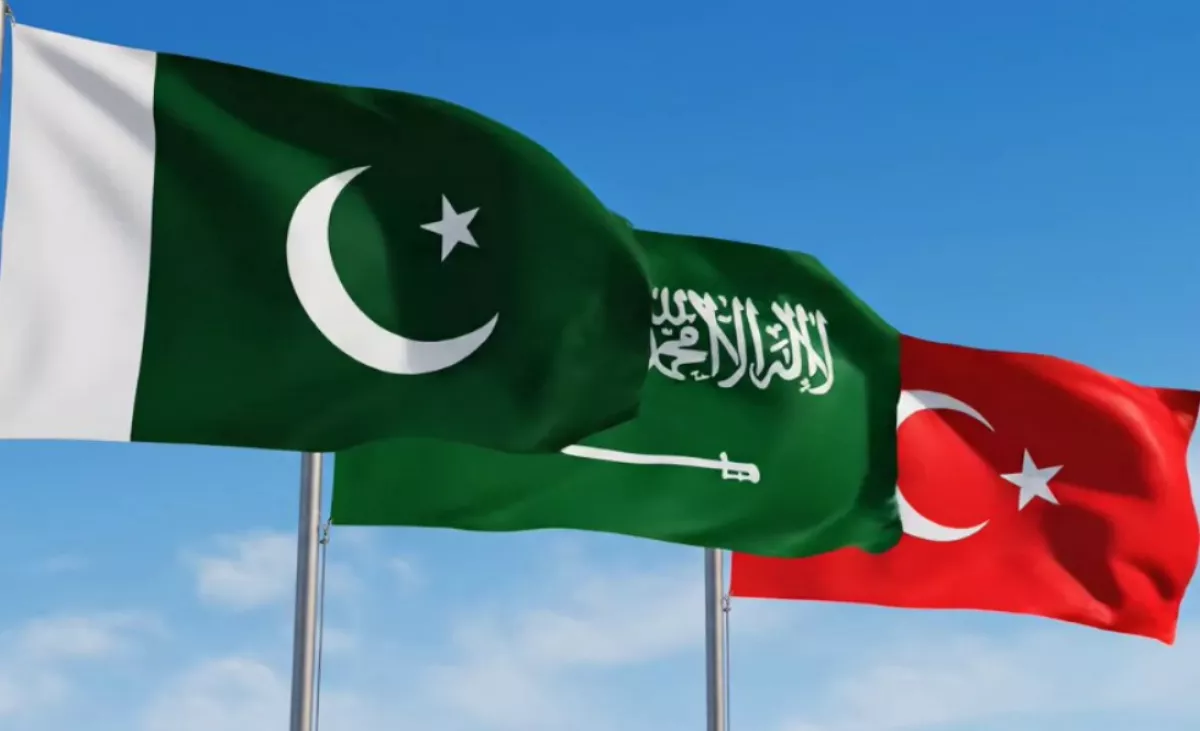
The Mecca Agreement
The Middle East is rapidly changing, reflecting Washington’s inability to manage effectively the order it claimed to govern unilaterally by virtue of its military might. The most glaring error was the conception of a reckless strategic instrument emphatically dubbed the Abraham Accords, supposed to put Tel Aviv in a position to curry favour with some Arab states. The most evident results to date are the fragmentation of the alliances painstakingly built in the area (especially in the Arabian Peninsula with the Gulf Cooperation Council), greater Israeli aggression towards neighbouring countries and peoples (the war of extermination in Gaza, the invasion of southern Lebanon and territories in Syria, air strikes against Iran), and a strengthened understanding among Islamic political and military groups of different backgrounds (see the convergence among Ḥamās, Ḥizb Allāh and Ḥūthis).
The political response, not so much explicitly directed at the Abraham Accords, but at the unwary model of imagining geopolitical arrangements without evaluating their medium- to long-term effects, came a few weeks ago with the Mecca Joint Defence Agreement. Nothing shocking, let’s be clear, and above all nothing decisive when considering the ambiguities and contradictions, but the attempt to underscore the political awareness regarding regional security with resources under full regional responsibility and control is significant. However, the importance attached to the Tripartite Agreement, signed on August 7th at the Aṣ-Ṣafā Palace in Mecca, is evidenced by the rank of its signatories: Saudi Crown Prince and Prime Minister Muḥammad bin Salmān, Turkish President Recep Tayyip Erdoğan, and Pakistani Prime Minister Shehbaz Sharif [photo below from Iran Analytica].
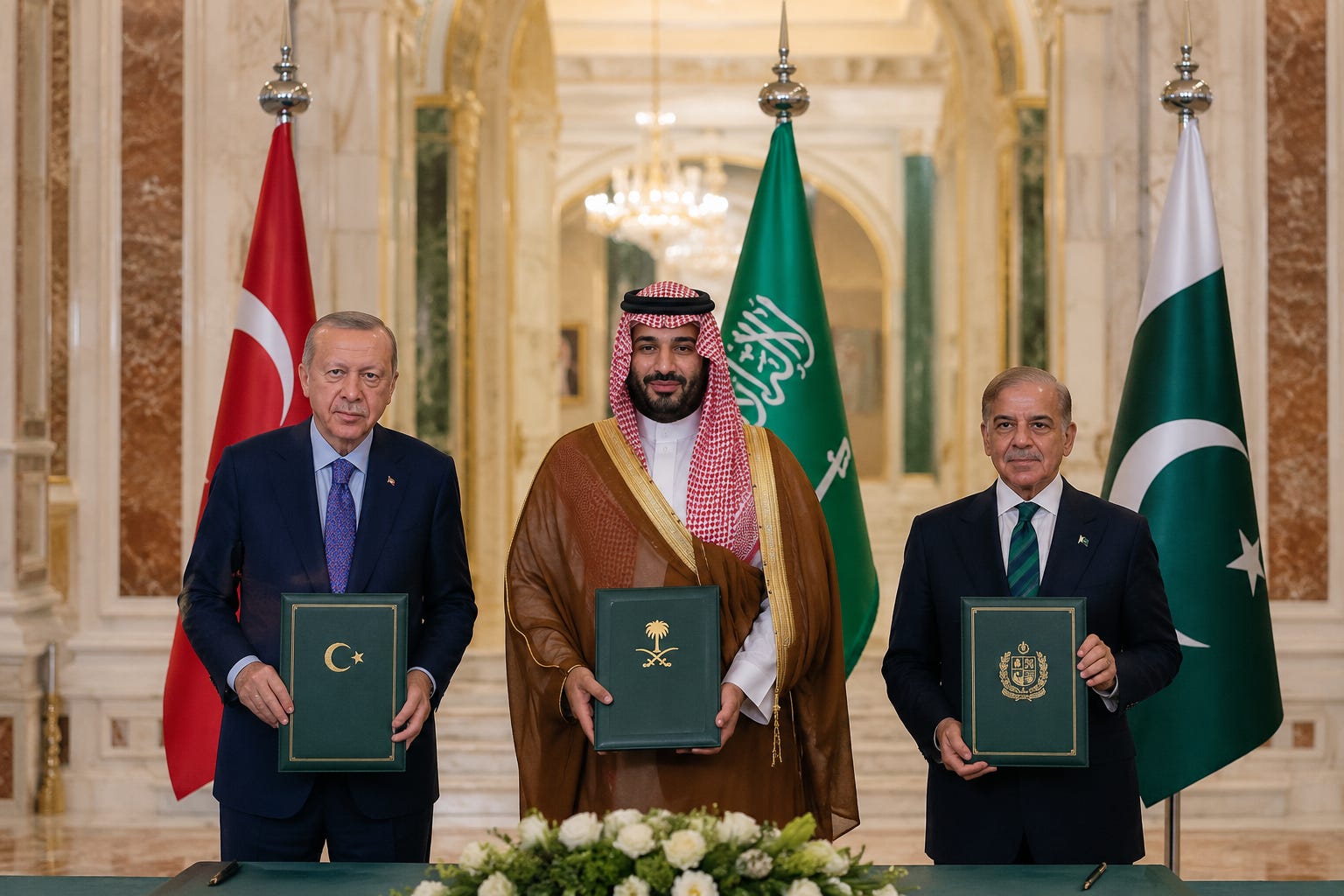
The Agreement aims to increase regional security cooperation. A statement agreed upon by Türkiye and Pakistan clarifies that “it is intended to strengthen collective deterrence against any act of aggression and stipulates that any armed attack against any one of the three states shall be regarded as an attack against them all.”[1] However, the Agreement does not specify the conditions under which the three countries would be required to intervene, nor does it require mandatory participation in any military action undertaken by each contracting country. Furthermore, it does not refer, in the text or in official statements, to a unified command structure, permanent bodies, a permanent joint force, or a common budget.[2] Therefore, it is not a NATO-style military alliance, and it has no mechanisms like those under its Article 5.
This consideration is fundamental to understanding the context in which the Tripartite Pact was born and, above all, the moment of a worrying crisis affecting the entire Middle East and neighbouring regions, from South Asia to East Africa. The war of aggression Israel and the United States waged against Iran since February 28th has led to a defensive response by the Islamic Republic against military installations in Washington-allied countries of the region, particularly Saudi Arabia, other Persian Gulf states, Jordan, and Iraq. Hence, those states’ concerns for their security in the absence of effective American protection, and for the viability of transportation services, especially energy but not only, following the shipping blockade in the Strait of Hormuz.
The Agreement appears to be a defensive reaction to Saudi Arabia’s advantage and to thwart any further attacks from Tehrān. The accuracy of this overly simple deduction must be verified through a careful analysis of the utterances, the diplomatic predisposition to prudence, the tangle of economic and commercial relations the states involved maintain among themselves and outside the affected area, and the political will of the actors to become involved in the ongoing armed conflicts.
The statements from the involved countries
President Erdoğan said: “The agreement, which also reaffirms the right of defense as defined in Article 51 of the UN Charter, targets no country and is open to the participation of all brotherly countries that aim for the peace, prosperity, and stability of our region.”[3] His Deputy, Cevdet Yılmaz, reiterated,[4] and other government officials reinforced, specifying that all existing agreements with other states and organisations remain in full force.
Ishaq Dar, Deputy Prime Minister and Foreign Minister of Pakistan, also declared his support for the Agreement’s peaceful purpose: “We remain committed to advancing the cause of peaceful resolution of all conflicts and building a more secure, stable and prosperous future for our peoples.”[5]
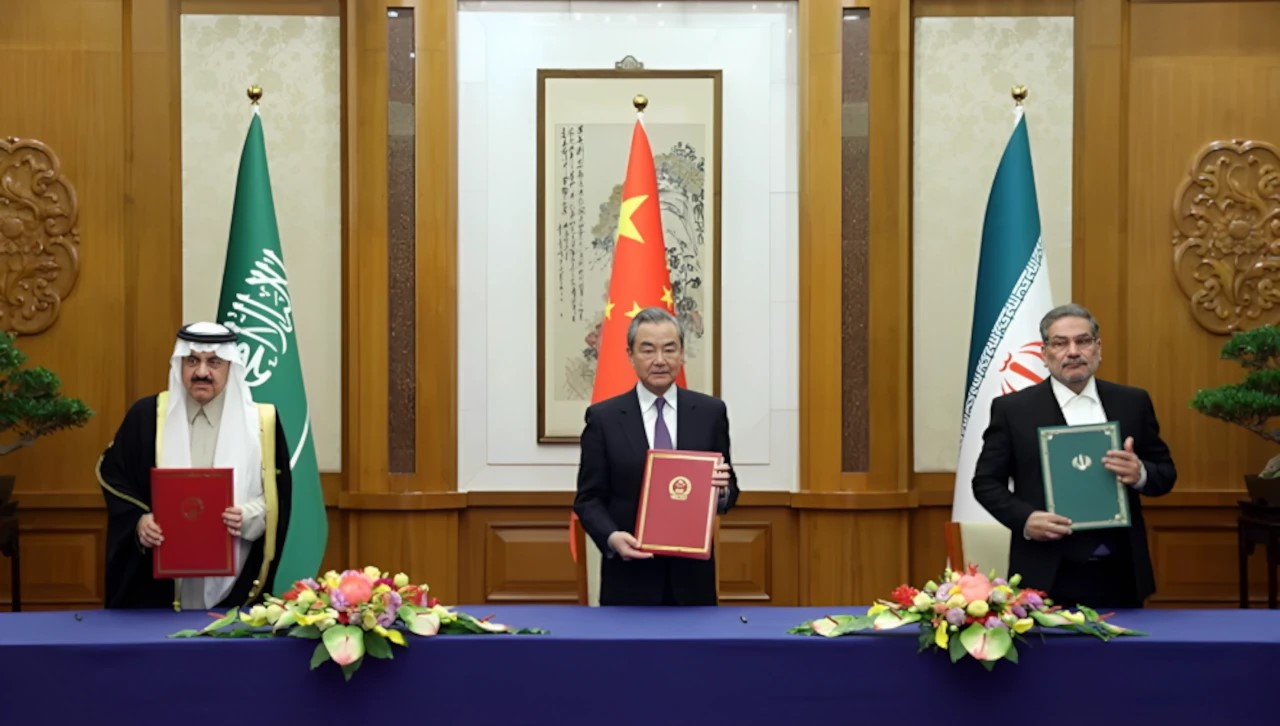
Iran-Saudi Arabia diplomatic agreement brokered by Wáng Yì, State Councillor and Foreign Minister of China, Beijing, March 10th, 2023
However, Tehrān criticised the agreement. Ebrahim Rezaei Babadi, from the Commission on National Security and Foreign Policy of the Islamic Consultative Assembly, wrote: “The Saudis should know that a paper agreement with Turkey and Pakistan will not bring them security, just as years of one-sided ‘milking’ by the Americans did not bring them security. Change your policies so that you do not have to #BegForSecurity from others.”[6] It is worth recalling that the Islamic Republic of Iran and Saudi Arabia resumed diplomatic relations in March 2023 at a summit in Beijing, mediated by the People’s Republic of China.[7]
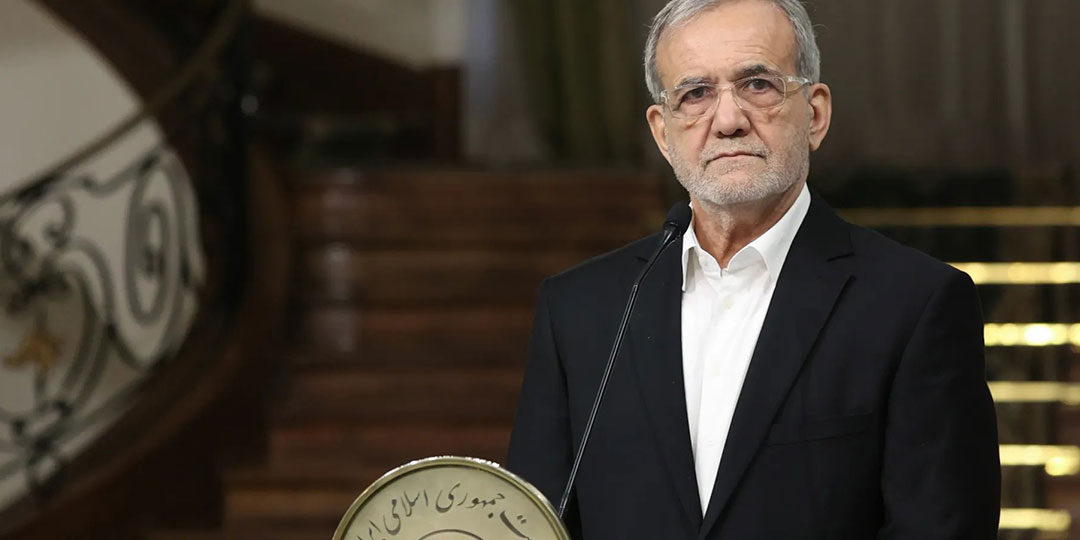
Mas’ūd Pezeshkian, President of the Islamic Republic of Iran
Tehrān’s irritation with the tripartite initiative is also due to the impression that it could transform into an anti-Shiite coalition, targeting the country that leads the world’s main religious community. This eventuality would align with Israeli policies since 1979, when the Islamic Revolution in Tehrān made it clear that an insurmountable barrier would be erected against Zionist expansionism in the region, from Lebanon to Syria to Iraq.
On the other hand, the invitation to join the Mecca Pact that Iran reportedly received in recent days would change the outlook. The news, not officially confirmed by the Iranian Foreign Ministry, was revealed by Mehdi Rahimi, head of the Iranian Parliamentary News Agency, Khaneh Mellat, in an interview with the Lebanese pan-Arab satellite television channel Al Mayadeen.[8]

Abbas Araghchi, Iranian Foreign Minister (Photo BGNES)
The Saudis emphasise that “the agreement does not come at the expense of the Kingdom’s strategic and strong relations at the Gulf, Arab, and international levels.” [Fraser and Ahmed, 2026].
Rayed Khālid Krimly, Saudi Deputy Minister for Public Diplomacy, said the agreement “does not represent an effort to establish a military axis or a sectarian bloc. Nor is it linked to any nuclear ambitions or arms race;[9] ʿAbdul-ʿAzīz Sager, founder and current president of the Gulf Research Center, a Jeddah-based think tank, says: “Three of the Muslim world’s most influential states are convening at a moment of heightened uncertainty, demonstrating a growing willingness among regional and middle powers to coordinate more closely on security matters … The trilateral framework could strengthen the three countries’ collective diplomatic and defense weight while contributing to the emergence of a more regionally driven security architecture.”[10]
Tel Aviv has not commented, and New Delhī has said it is closely following the situation.
Relations between the Contracting Parties
The advent of that new agreement on the Middle Eastern stage, while still strategically weak, will undoubtedly disrupt some alliances already in crisis. Saudi Arabia, Türkiye, and Pakistan combine capabilities and expertise ranging from vast financial, industrial, and commercial power to military agility, decades-long membership in NATO (Türkiye), nuclear deterrence (Pakistan), and a symbolic yet authoritative religious appeal throughout the Muslim world (Saudi Arabia, with Mecca and Medina holy sites).
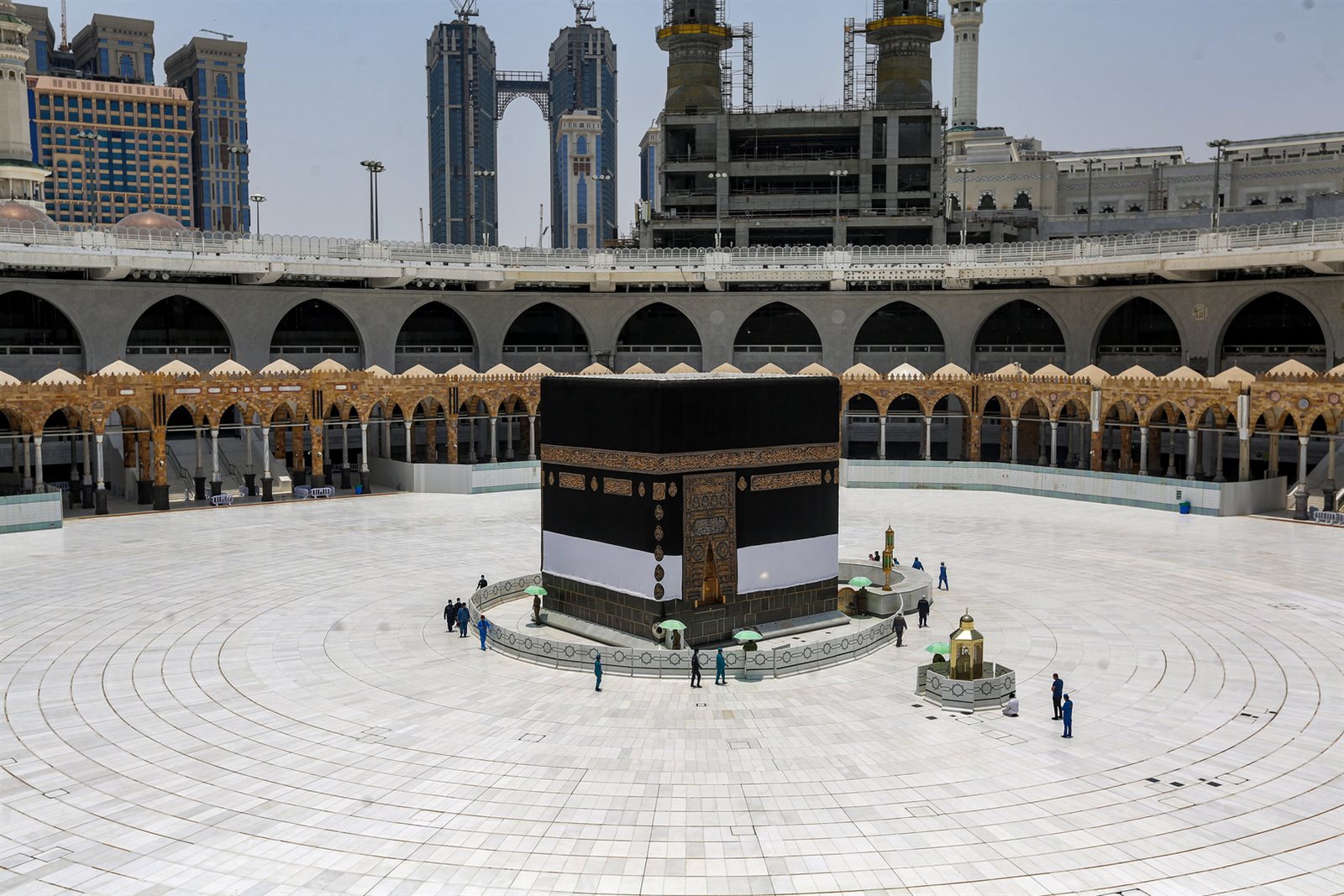
Mecca (Saudi Arabia), the Ka’ba site
The role of the three regional powers in the Middle East has often been, or still is, mediation in conflicts (Türkiye between Tel Aviv and Gaza, Pakistan in the Washington-Tehrān war) or regional aggregation (such as Saudi Arabia with the Gulf Cooperation Council).
Bilateral relations have, above all, shown a strong bond between Riyāḍ and Islāmābād, with the Arab country benefiting from military supplies and related technical assistance. For almost a year, the two states have been linked by a security and defence deal, the Strategic Mutual Defence Agreement (SMDA),[11] a precursor to the Mecca Joint Defence Agreement, given the similar characteristics and intentions expressed in the two understandings. Even then, the issue of the appropriateness of a possible use of nuclear weapons to defend the Saudis had been raised, given that Pakistan is the only nuclear power in the Muslim world. But in this context, Islāmābād has already shown balance and wisdom by not reacting accordingly to the implementation of a controversial commitment foreshadowed by the agreement signed with Riyāḍ.

Pakistani Prime Minister Shehbaz Sharif with Saudi Crown Prince Muḥammad bin Salmān, Riyāḍ, September 17th, 2025
Thus, the novelty of the Mecca Pact is Riyāḍ’s openness toward Ankara, with which past relations had been far from idyllic, especially regarding its attitude toward a segment of political Islam, particularly the Muslim Brotherhood.
What is certain is that the current Middle Eastern crisis affects Saudi Arabia not only in terms of security, but also its commercial interests (oil exports) and the implementation of major economic development plans (see Saudi Vision 2030, the NEOM linear smart city megaproject, and the Jāzān Special Economic Zone, both strategically located on the Red Sea).
Riyāḍ has understood that diplomatic initiative means more than the volatile defence protections of its major ally on which it had relied. Islāmābād and Ankara can offer security guarantees, discussed and determined at the same level of responsibility, without depending solely on the unreliable decisions of declining superpowers and being subordinated to the strategies and interests of others (e.g., Israel). Of course, the trade-offs will be significant and adequate (facilitations for market opening and technological and military acquisitions), but perhaps not as restrictive as those to which it has been subjected for decades. Conversely, the Saudis will have to take note that the two other partners in the Agreement have their own respective strategies in the Middle East that may not coincide with the Kingdom’s. For example, both Türkiye and Pakistan are unlikely to be drawn into regional conflicts with Iran. The Agreement is not an alliance, after all.
Riyāḍ must also consider that its partners have vast international interests and relationships that the Kingdom lacks, since its choice to limit its dialogue to the Western world has led to a restrictive and overly selective dependence. Türkiye is certainly an important NATO member, but it also has significant influence in the Black Sea, the Caucasus, Central Asia, the Eastern Mediterranean and East Africa, as well as the Middle East. This breadth of perspective leads it to engage in dialogue with numerous countries around the world, including those of the European Union, the Russian Federation, the People’s Republic of China, and, of course, the omnipresent United States. The same can be said for Pakistan, which, aside from its influence on many Muslim countries, has economic and cultural projections across much of South and East Asia, gaining a decisive role in the continent’s geopolitical structures.
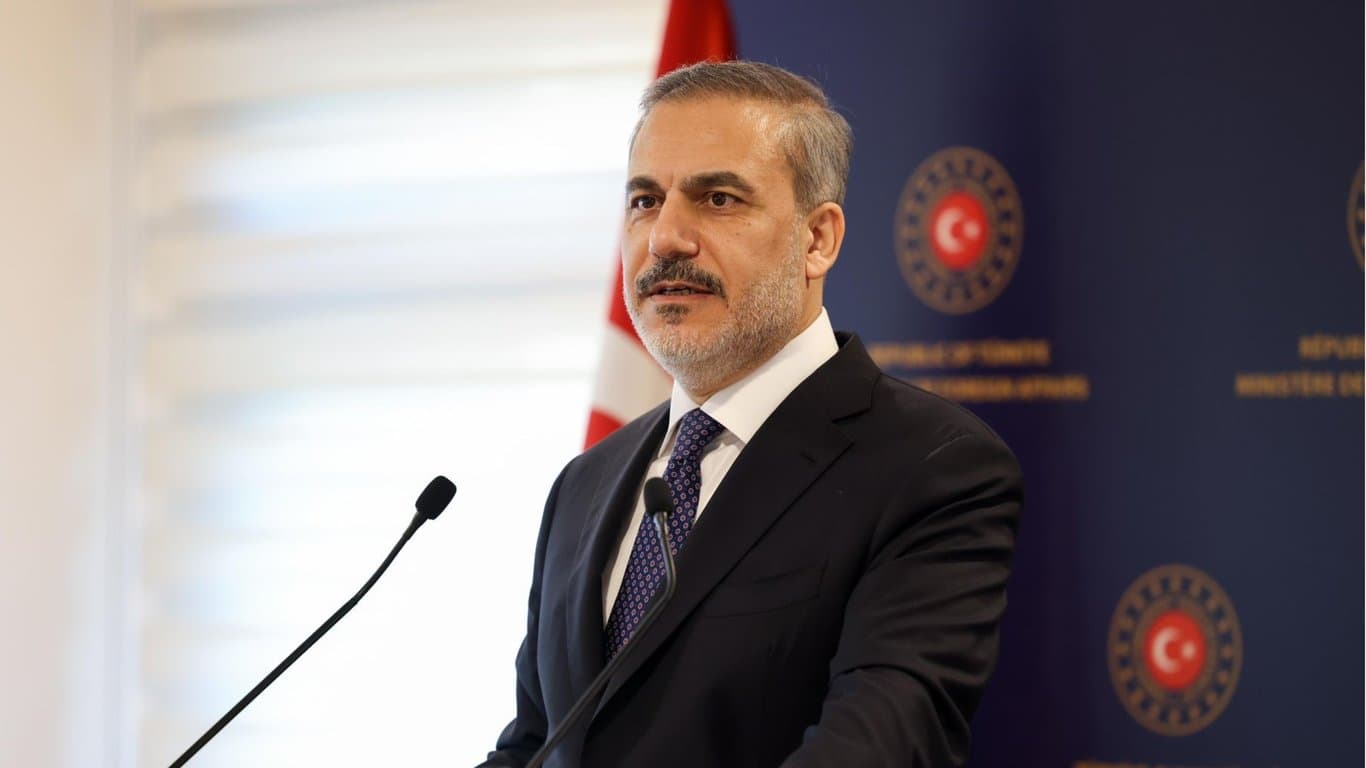
Turkish Foreign Minister Hakan Fidan
The Israel problem and the Egypt opportunity
The Israel problem is, of course, the real dilemma in the Middle East. Israel did not express public judgments on the Mecca Agreement, as we have already said. This new entente could bring both negative and positive aspects, depending on one’s perspective and the resulting impact on Tel Aviv’s strategies. The Tripartite Agreement appears aimed at countering Tehrān and its allies in the context of the ongoing U.S.-Iran war, but also at creating a true geopolitical axis to regulate and control the policies of Middle Eastern states or those influenced by them. This would constrain the Jewish State and its expansionist intentions in the area.
 The inextricable issue remains the controversy over the future of Gaza. Ankara has an uncompromising position on the issue, as do Tehrān and Dōḥa; conversely, since Saudi Arabia’s membership in the Abraham Accords now seems to have faded, Riyāḍ has preferred to keep a dialogue open with Tel Aviv even after the invasion of the Strip. Meanwhile, Pakistan seems more annoyed by Abu Dhabi’s new role as Israel’s proxy, confirming its consonance with Riyāḍ on the issue.
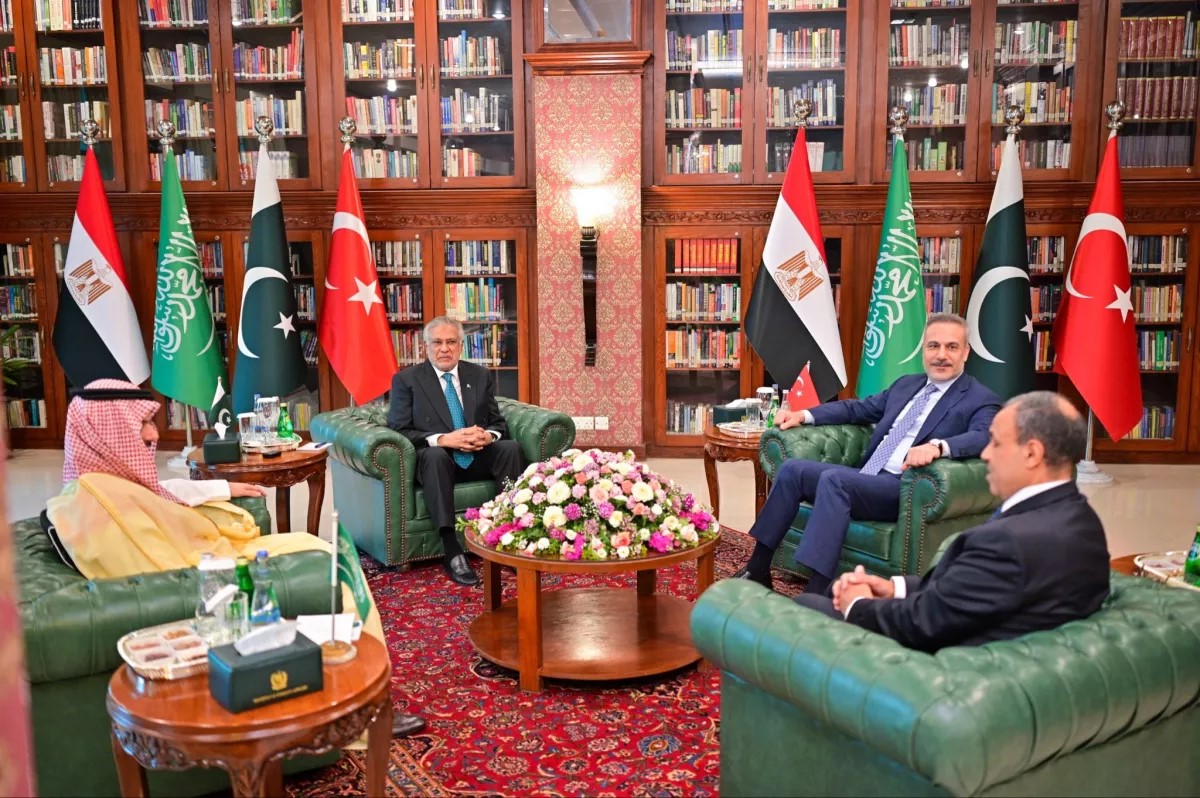
The meeting of the Foreign Ministers of Türkiye, Egypt, Pakistan and Saudi Arabia in Islāmābād, March 2026
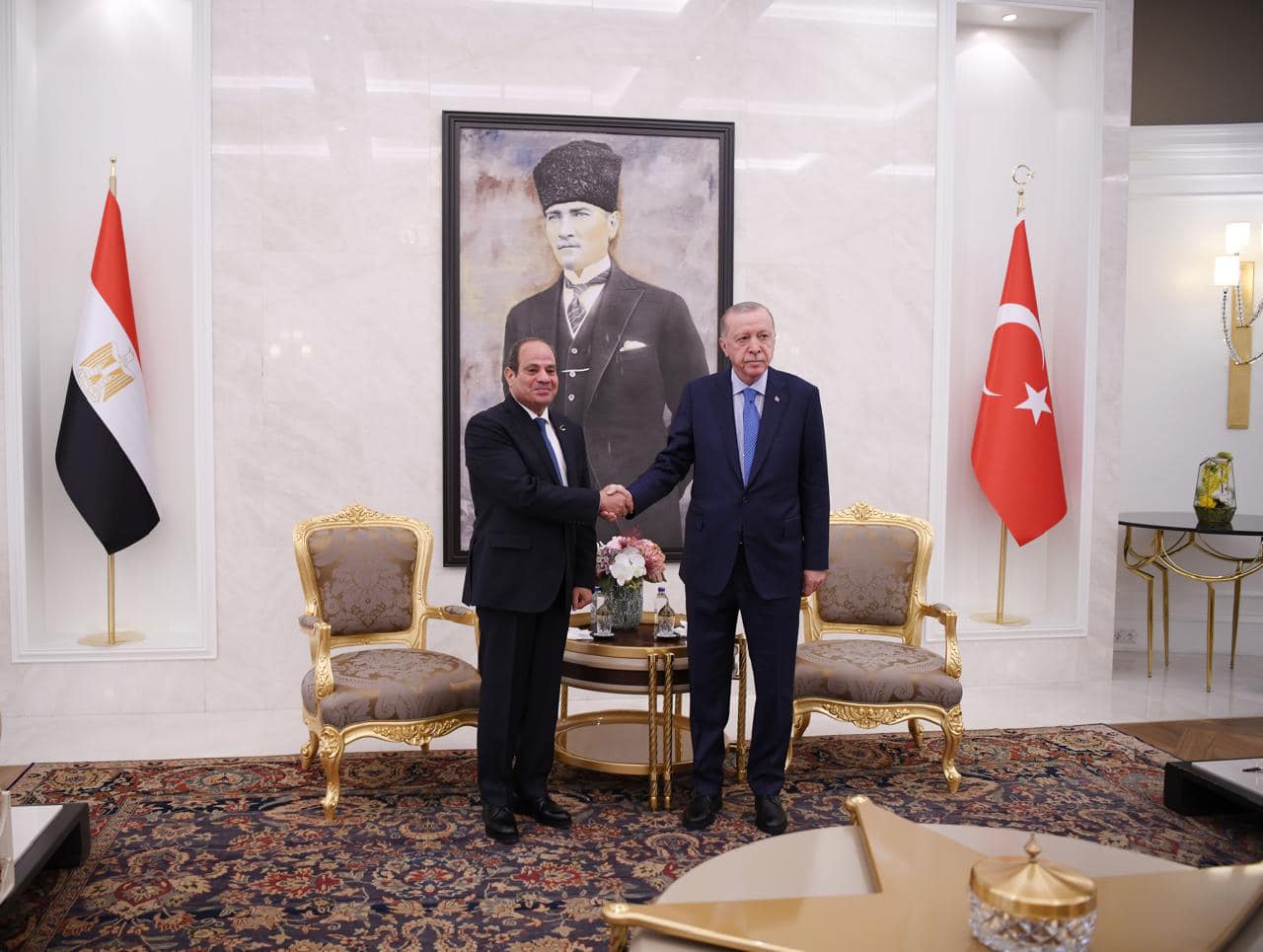
Meeting in Ankara in 2024 for Presidents ʿAbd al-Fattāḥ as-Sīsī and Recep Tayyip Erdoğan (Photo Egyptian Presidency)
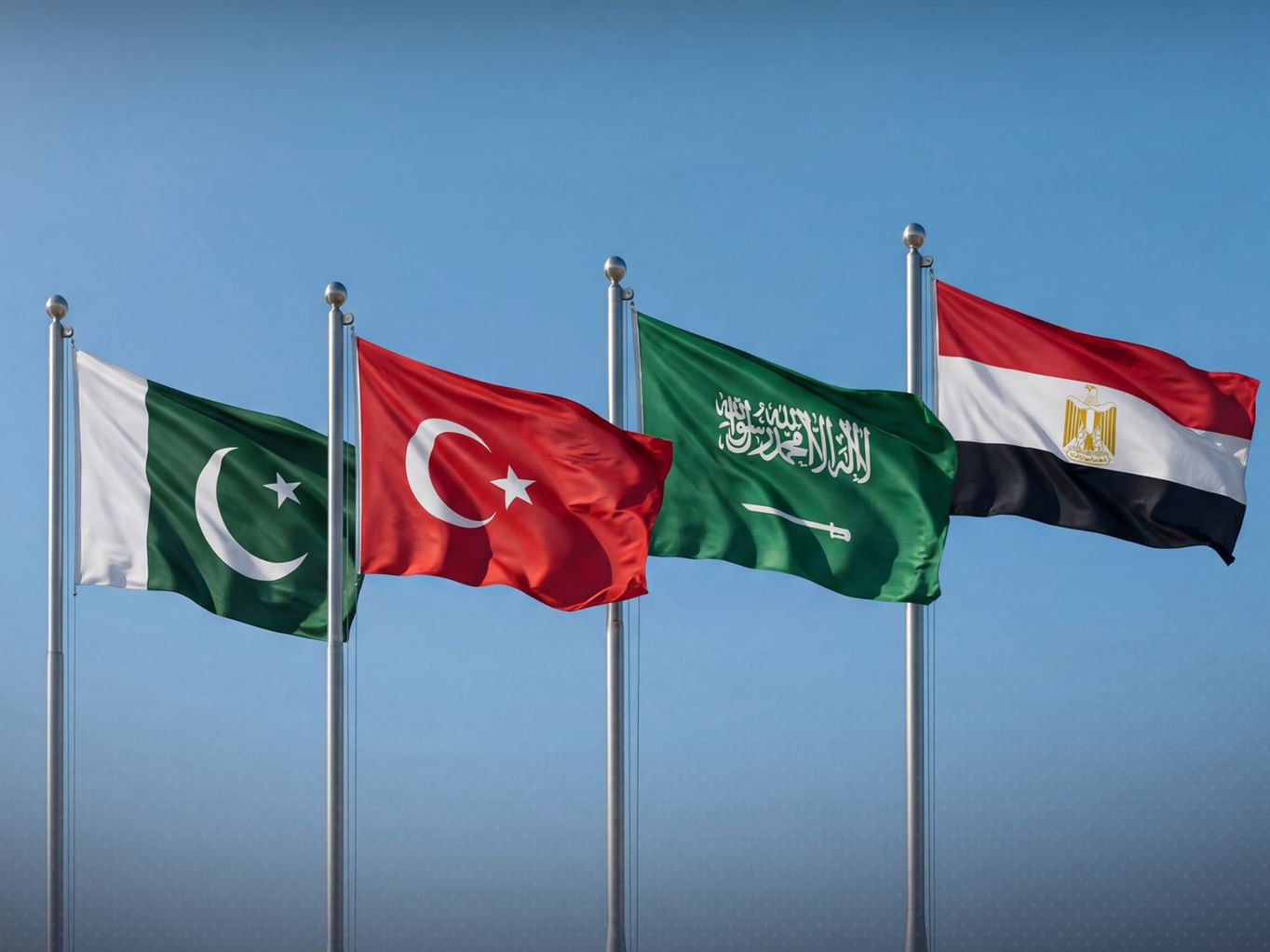
In this context, Egypt’s position is crucial. The meeting between the Foreign Ministers of Saudi Arabia, Türkiye, Pakistan, and Egypt in the Saudi capital last March during an Islamic summit[12] envisioned an agreement on a common security framework.[13] Despite its consensus on the need to defend Sudan, Somalia, and Eritrea (all countries bordering the Red Sea and the Gulf of Aden and therefore cornerstones of Egyptian security),[14] the Mecca Agreement does not include Egypt. President Erdoğan included Egypt’s participation as an option for the Agreement’s future expansion.[15] However, the reasons for Cairo declining (or perhaps postponing) this important regional agreement remain unclear.
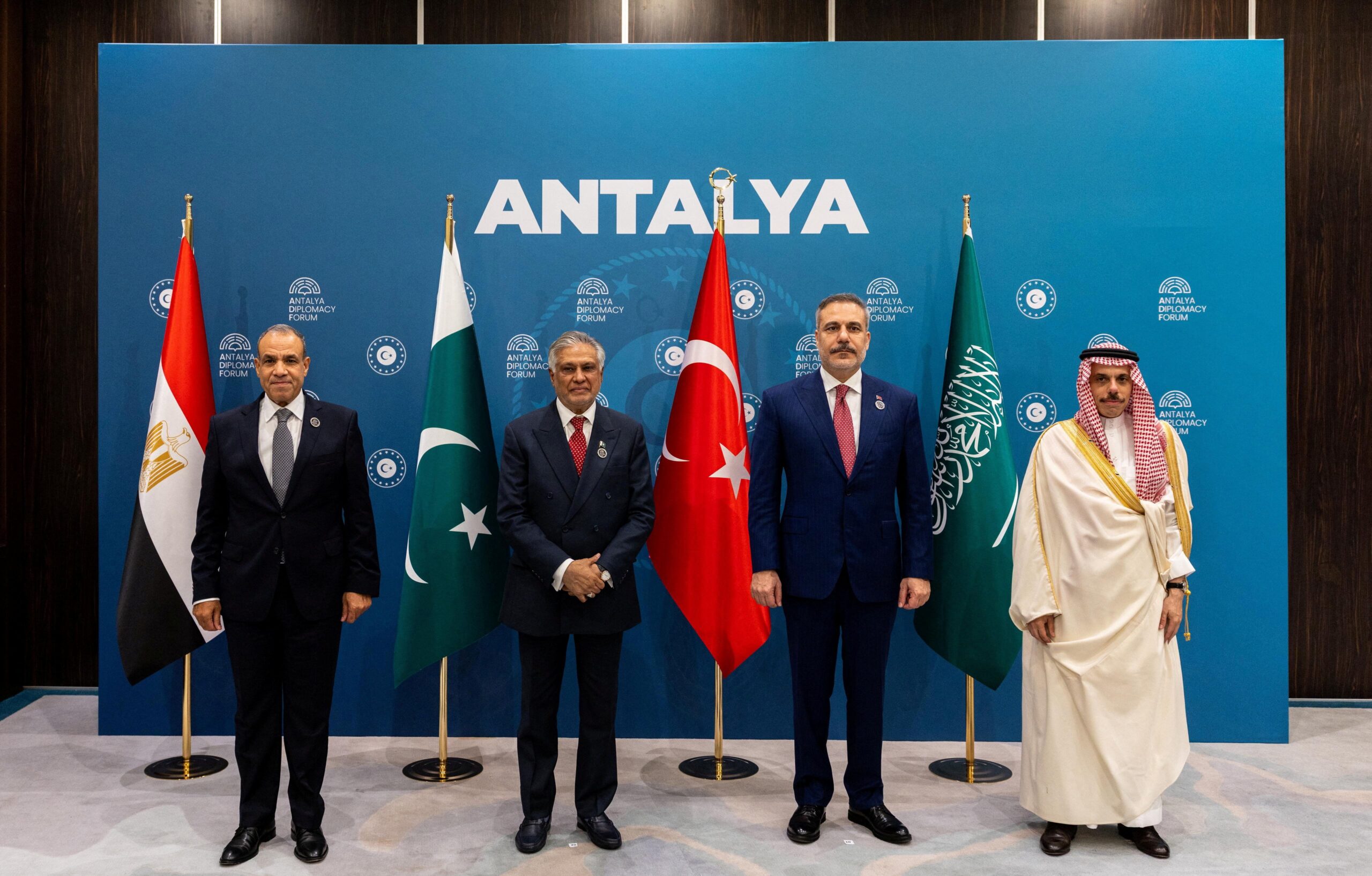
The meeting of the Foreign Ministers of Türkiye, Egypt, Pakistan and Saudi Arabia in the Turkish city of Antalya, May 2026
The visit to Cairo by Jared Kushner, U.S. Special Envoy for Peace Missions, who met with Egyptian, Turkish, and Qatari mediators, perhaps offers some glimmer of understanding. President Trump’s enterprising son-in-law, accompanied by Bulgarian Nikolaj Mladenov, Director-General of the U.S.-led Board of Peace, and former British Prime Minister Tony Blair, held an unprecedented, lengthy meeting with a Ḥamās delegation headed by its leader Khalīl al-Ḥayya.[16] Indeed, this is the first time the United States has held an official high-level meeting with an organisation it designated as terrorist, as did the U.K., the E.U., and ten other countries, mostly Latin American, but not the U.N.
Cairo is perhaps carving out a mediation role for itself that agreements like the one in Mecca would hinder, even though the objectives are shared. It would seem a concerted position rather than a distinction between partners. In short, a Middle East in flux that, amidst a thousand turbulences, is taking the lead in its own future. In this context, Egypt is well-placed for its pragmatism. It should be remembered that Cairo’s rapprochement with Ḥamās over a decade ago was preceded by the 2013 coup and the brutal crackdown on the Muslim Brotherhood, but also that the political reconciliation agreement between Ḥamās and Fataḥ was signed in the Egyptian capital four years later.
Complex Regional Strategies and External Projections
Rivalries among regional players in the Middle East persist and continue to shape individual states’ foreign policy agendas and, in turn, their priorities. For example:
- The Islamic Republic of Iran, aside from its historic dispute with Türkiye, considers Israel its worst enemy and opposes the Jewish state’s decades-long aggression in the Middle East in the hope of one day establishing a Greater Israel;
- Israel, in its brief history, has temporarily invaded all neighbouring countries and still permanently holds Gaza, the West Bank, and parts of Syria. Still, today it maintains privileged relations with the U.A.E. and Bahrain, its partners in the Abraham Accords.
As for the Mecca Agreement signatories and Egypt itself, the strategy is to maintain open dialogue with regional competitors without exacerbating hostilities:
- The Saudi Kingdom views the Āyatollāhs’ Iran as its main adversary, not only from the perspective of religious dispute, but also and above all, due to geopolitical competition around the Gulf. However, it has resumed diplomatic relations with Tehrān, as already mentioned, and, in the current circumstances, is not resorting to any particular retaliatory reactions for attacks suffered on its territory during the ongoing war;
- Türkiye has a historic dispute with Iran over control of bordering areas with mutual ethnic and linguistic minorities in Syria, Iraq, and Azerbaijan. However, Ankara also does not intend to be drawn into armed conflicts involving Tehrān; indeed, it is supporting ongoing mediation for truce or peace agreements;
- Pakistan, apart from the still open disputes dating back to the end of the British Crown Dominions in the area, considers India its priority antagonist and Iran its inconvenient neighbour. But the ongoing mediation in Islāmābād, with the presence of the Islamic Republic, and cooperation with Tehrān to counter terrorism and secure its borders imply a difficult neutrality, and at the very least, a non-hostile attitude;
- Egypt, as already mentioned, opposes Israel’s interference not only in the Gaza Strip but also in the Horn of Africa, including Somaliland, which Tel Aviv recently recognised as an independent country.[17] But this does not prevent ongoing diplomatic dialogue with the Jewish State, despite often harsh disagreements.
The picture becomes more complicated when we consider the relationships that bind the aforementioned countries to the major global powers. To put it simply:
- All of them, except Iran, maintain good relations with the United States through bilateral economic and trade agreements, but others also have military alliances (Türkiye) or security partnerships (Israel, Saudi Arabia, Egypt, Pakistan);
- All but Israel have signed the Belt and Road Initiative Memoranda of Understanding, establishing economic and trade relations with the People’s Republic of China.[18] In addition, three of the countries mentioned (Iran, Egypt and the U.A.E.) have joined BRICS+ as member states [D’Agostino, February 2025]; two of them (Iran and Pakistan) have joined the Shanghai Cooperation Organisation, and two others (Saudi Arabia and the U.A.E.) have become partners of it.[19] Chinese trade with the Gulf Cooperation Council countries and Beijing’s infrastructure investments in Iran and Saudi Arabia are significant.
- Since the fall of Baššar al-Asad’s Syrian regime, Iran has been the only Middle Eastern country to have signed a Comprehensive Strategic Partnership Treaty with the Russian Federation since last year. But Türkiye, Egypt and the U.A.E. also have excellent business and security relations with Moscow.
We must consider, in addition to membership in individual formats matching purely diplomatic needs, the most effective tools for planning economic integration among regional areas, which are then true instruments of geopolitical construction. Two main communication axes cross the Middle East:
- The India-Middle East-Europe Economic Corridor (IMEC), which connects the two terminals via the United Arab Emirates, Saudi Arabia, Jordan, and Israel;
- The China-Central Asia-West Asia Corridor, part of the Belt and Road Initiative, which already involves Iran, the Caucasus, and Türkiye and is set to reach the Balkans.
It goes without saying that the two initiatives imply a geopolitical conflict, stemming from the evident U.S.-China dispute for control and influence in the Middle East as a bridge between Asia and Europe.[20]
Clearly, IMEC was a 2023 response to the Chinese-initiated BRI and a product of the I2U2 partnership by India, Israel, the U.A.E. and the U.S., born in 2022 following and in support of the Abraham Accords.[21] Another Ankara-inspired initiative flanking the second cited corridor is the Iraq–Europe Development Road, following the Memorandum of Understanding between Iraq, Türkiye, Qatar, and the U.A.E. signed in 2024, with forecasts of full implementation by 2050. In turn, this agreement can be seen as a response to the IMEC project while clarifying the fronts of geopolitical interests at stake.[22]
Regarding the Mecca Tripartite Agreement, Riyāḍ, Ankara, and Islāmābād do not share the same strategic objectives, since the IMEC agenda excludes Türkiye and includes Israel, supporting the normalisation of Riyāḍ-Tel Aviv relations and in line with the aim of the Abraham Accords. Pakistan, also bypassed by the IMEC, looks to Iran as a partner and China as a financier for its massive infrastructure investments. Hence, the limits of the Mecca Agreement when interpreted as an alliance, and the difficulty of the foreign policy decisions the Kingdom of Saudi Arabia will have to make in the near future.
Final remarks
In summary, Middle Eastern countries are approaching foreign policy options with greater flexibility, breaking free from the constraints of rigid alliances that characterised the ideological past. In this sense, a transition is underway toward a new mindset, with proactive directions resulting in more realistic implementation methods. Resilience in governing processes leads to a higher understanding of options on the ground and more informed, less self-referential diplomatic action. Conversely, the breakdown of the old regional order, if not managed with judgment and strategic criteria, could lead to instability with unimaginable consequences.
Paradoxically, today, interstate wars in and around the Middle East are, despite everything, kept at low intensity, as is with the U.S.-Iran one. Instead, wars are fiercely fought by states against political-military organisations, as is sensationally the case with Israel, armed by the West and its allies, against Ḥamās, Ḥizb Allāh and the Ḥūthis, all movements legitimately representing a significant portion of the population in their respective countries or having held and continuing to hold important institutional roles. In this case, Tel Aviv is an exception in the Middle Eastern landscape due to its rigid ideological conception tied to 20th-century Zionism. Yet, while tightening its ancient and reckless agenda of all time, it captures the spirit of the times, attempting to break away from total subservience to its now worn-out American ally, indeed, becoming a skilled advisor to Washington’s moves in the Middle East. To what extent?
Currently, the U.S. is in the midst of an existential crisis, evidenced by the POTUS’ instability and unreliability, as well as the unsustainability of the public debt resulting from the burden of its role in the world. And this issue, which analysts are almost in awe of discussing, certainly did not arise with the Trump presidency. The U.S. is pursuing a very specific agenda that, fortunately, is no longer guided by the deceptive ideologies it propagated. This comes at a very high price in terms of political image, to the point of appearing to be a loser in a senseless war against the Islamic Republic and recognising that peace is not achieved only through agreements between states, but also by opening to movements that truly represent the people and, until recently, were hunted as terrorists. And yet, the White House is not so out of touch with the context that it does not understand a new era is dawning, leaving behind the logic that has governed the entire world for more than a century, for better or worse.
It is especially difficult for his terrified European allies to grasp it if, after having flirted with the worst international Zionism to this day and with an unacceptable delay, they turn to Netanyahu asking if he could, please, renounce colonial expansionism in the West Bank. This is European diplomacy, unfortunately, especially among those nations that still refuse to recognise the State of Palestine at the United Nations. The inflexible response comes from Tel Aviv’s institutions in the midst of the election campaign, with the inauguration of the site where Palestinians who do not bow to the regime’s diktats will be hanged.
If Moscow is silent, Beijing is even more so, not chasing the political news of war clashes dictated by individual countries’ elections, but pursuing its own long-term strategic security policy and providing insights into the new landscape of relations between peoples: “Countries may become partners when they have the same values and ideals, but they can also be partners if they seek common ground while reserving differences,” reads the 2017 white paper China’s Policies on Asia-Pacific Security Cooperation. And more, with great foresight regarding current events: “Major countries should treat the strategic intentions of others in an objective and rational manner, reject the Cold War mentality, respect others’ legitimate interests and concerns, strengthen positive interactions and respond to challenges with concerted efforts. Small and medium-sized countries need not and should not take sides among big countries. All countries should make joint efforts to pursue a new path of dialogue instead of confrontation and pursue partnerships rather than alliances.”[23]
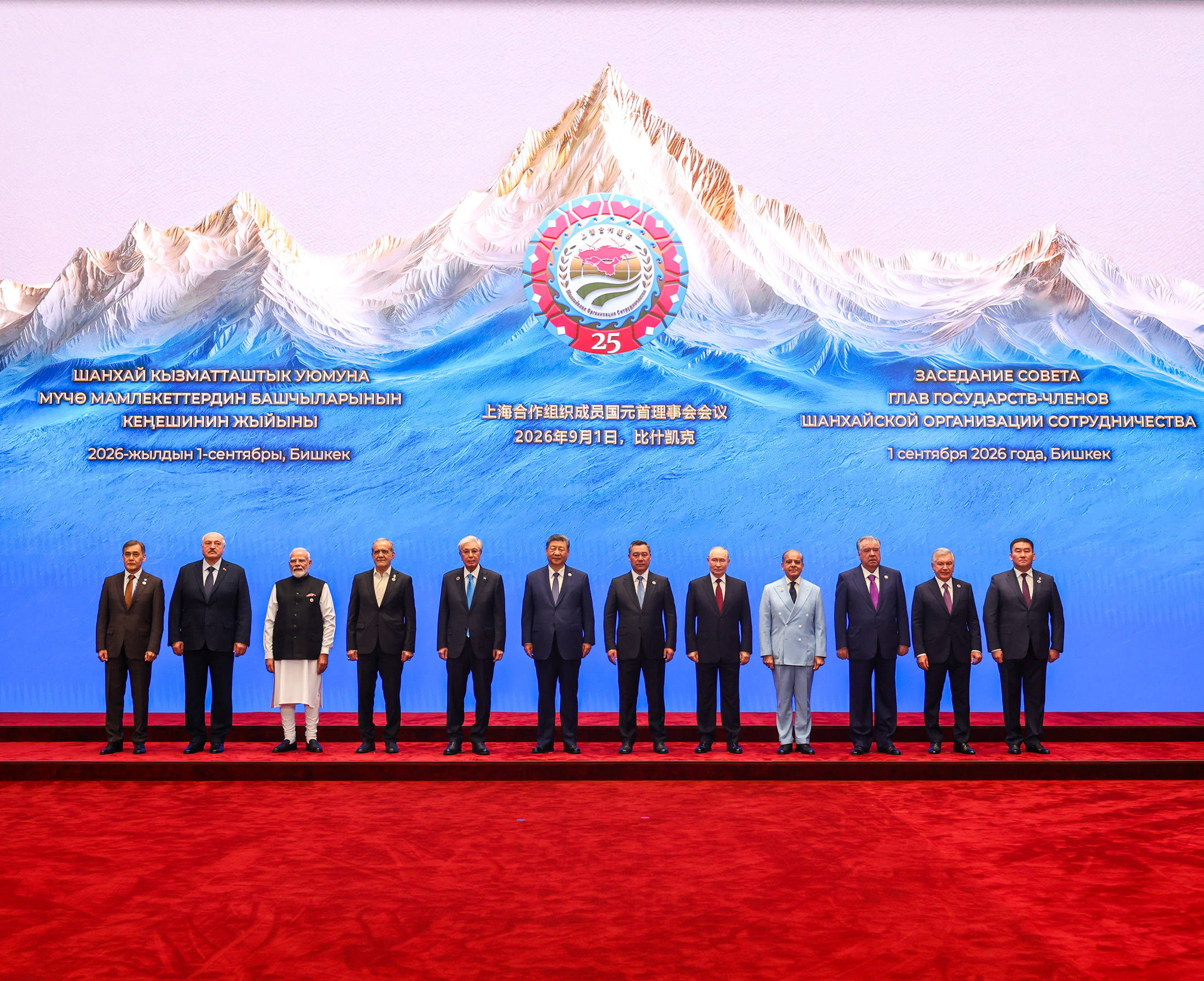 UN Secretary-General António Guterres, speaking from Kyrgyzstan at the Shanghai Cooperation Organisation Summit (SCO+ Meeting) in Bishkek on September 1st [on the left, the Group’s leaders, photo courtesy of the Indian Prime Minister’s Office], said: “We must reform our multilateral institutions, including the United Nations and the Bretton Woods system, to reflect today’s realities, and increase the representation and influence of developing countries to build a just world order.”[24] With this statement, the UN reaffirms its acceptance of the intentions expressed in the Tianjin Declaration issued during last year’s SCO Summit under the Chinese presidency [D’Agostino, September 2025].
And His Holiness Leo XIV, emphasising the need for diplomacy and multilateralism, wrote in his Encyclical Letter Magnifica Humanitas: “In international relations, dialogue is an irreplaceable diplomatic tool for preventing conflicts and rebuilding bonds of trust. Faced with the impulsive broadcasts, aggressive rhetoric and power politics that characterize our time, the vocation of diplomacy is to foster dialogue with all parties, including those interlocutors considered less ‘convenient’ or not considered legitimized to negotiate.”[25]
Will this be the future of the still-newborn 21st century?
REFERENCES
Al Jazeera. “Why Kushner met Hamas leaders, and what it means for Trump’s Gaza roadmap,” August 17th, 2026. https://www.aljazeera.com/news/2026/8/17/why-kushner-met-hamas-leaders-and-what-it-means-for-trumps-gaza-roadmap.
Arab News. “Turkish, Saudi, Egyptian and Pakistani FMs meet in Riyadh amid Ankara’s push for security pact — report,” March 22nd, 2026. https://www.arabnews.com/node/2637221/pakistan.
Azhari, Timour, Shahid, Ariba and Gumrukcu, Tuvan. “Saudi Arabia, Turkey, Pakistan pledge mutual defence as Middle East turmoil escalates,” August 7th, 2026. https://www.reuters.com/world/asia-pacific/saudi-arabia-turkey-pakistan-sign-joint-defence-deal-amid-regional-turmoil-2026-08-07/
CBS News. “Saudi Arabia, Turkey and Pakistan sign key defense agreement,” August 7th, 2026. https://www.cbsnews.com/news/saudi-arabia-turkey-pakistan-defense-agreement/
D’Agostino, Glauco. “Horn of Africa and the Red Sea: Laboratories for Verification of Middle East Alliances,” February 22nd, 2026.
HORN OF AFRICA AND THE RED SEA: LABORATORIES FOR VERIFICATION OF MIDDLE EAST ALLIANCES
D’Agostino, Glauco. “Unilateral Tests of a New World Order at the Expense of Somalia, Venezuela, and Greenland,” January 15th, 2026.
UNILATERAL TESTS OF A NEW WORLD ORDER AT THE EXPENSE OF SOMALIA, VENEZUELA, AND GREENLAND
D’Agostino, Glauco. “The ‘Spirit of Shànghăi’ and the Slow Decline of the West,” September 16th, 2025.
D’Agostino, Glauco. “The New Asian Geopolitics in the Wake of the Silk Road and Marco Polo’s Feats,” February 17th, 2025.
THE NEW ASIAN GEOPOLITICS IN THE WAKE OF THE SILK ROAD AND MARCO POLO’S FEATS
Geopolitica. Revistă de Geografie Politică, Geopolitică şi Geostrategie, no. 105 (4/2024), (Bucureşti: Top Form).
D’Agostino, Glauco. “Global Governance: Is Asia’s Time Coming?” February 24th, 2023.
Geopolitica. Revistă de Geografie Politică, Geopolitică şi Geostrategie, no. 96-97 (4/2022), (Bucureşti: Top Form).
France 24. “Saudi Arabia, Pakistan and Turkey sign mutual defence agreement,” August 7th, 2026. https://www.france24.com/en/middle-east/20260807-saudi-arabia-pakistan-and-turkey-sign-mutual-defence-agreement.
Fraser, Suzan and Ahmed, Munir. “Saudi Arabia, Turkey and Pakistan have signed a key defense agreement,” August 7th, 2026. https://apnews.com/article/saudi-arabia-turkey-pakistan-defense-agreement-58048d4a100befd4d2c18e0cbae58b7c.
Hameed, Sameena. “Israel as India’s Pivot in the IMEC,” in Contemporary Review of the Middle East, Special Issue: Gaza Crisis and India, Guest Editor P. R. Kumaraswamy, no. 11 (4/2024) (Thousand Oaks, California, U.S.A: Sage Publishing), 511–525. doi: 10.1177/23477989241293556.
Iran International. “Defense pact not linked to nuclear ambitions, Saudi official says,” August 7th, 2026. https://www.iranintl.com/en/202608070847.
Latif, Aamir. “Pakistan’s top diplomat says Mecca defense pact ‘purely’ defensive in nature, remains open to other regional countries,” August 9th, 2026, Anadolu Ajansı. https://www.aa.com.tr/en/middle-east/pakistans-top-diplomat-says-mecca-defense-pact-purely-defensive-in-nature-remains-open-to-other-regional-countries/4022424.
Leon, Eli. “Saudi Arabia, Turkey, Pakistan invited Iran to join newly-established Mecca defense pact – report,” August 23rd, 2026, The Jerusalem Post. https://www.jpost.com/middle-east/iran-news/article-906316.
Nedopil, Christoph. Countries of the Belt and Road Initiative (Shanghai, China: Green Finance & Development Center, FISF Fudan University, 2025). www.greenfdc.org.
Saudi Press Agency (SPA). “Minister of Foreign Affairs Holds Meeting with the Foreign Ministers of Egypt, Türkiye and Pakistan,” September 30th, 1447 (2026). https://spa.gov.sa/en/N2541576.
Soylu, Ragip. “Turkey’s Erdogan opposes India-Middle East transport project,” September 11th, 2023. https://www.middleeasteye.net/news/turkey-erdogan-opposes-india-middle-east-corridor.
The Associated Press. “Saudi Arabia, Turkey, Pakistan sign mutual defense pact,” in The Asahi Shimbun, August 10th, 2026. https://www.asahi.com/ajw/articles/16798981.
The Holy See, Dicastery for Communication. “Encyclical Letter Magnifica Humanitas of His Holiness Pope Leo XIV on Safeguarding the Human Person in the Time of Artificial Intelligence,” May 15th, 2026. https://www.vatican.va/content/leo-xiv/en/encyclicals/documents/20260515-magnifica-humanitas.html.
The Times of India. “Islamic Nato taking shape? What the Saudi-Pakistan-Turkey Mecca pact means for Iran & Israel,” August 7th, 2026. https://timesofindia.indiatimes.com/defence/international/islamic-nato-taking-shape-what-the-saudi-pakistan-turkey-mecca-pact-means-for-iran-india-israel/articleshowprint/133032539.cms.
Türkiye Today. “Erdogan opens door to Egypt joining Mecca defence agreement,” August 15th, 2026. https://www.turkiyetoday.com/region/erdogan-opens-door-to-egypt-joining-mecca-defence-agreement-3226168?s=1.
United Nations. “At SCO summit In Kyrgyzstan, Guterres calls for more representative global governance,” September 1st, 2026. https://news.un.org/en/story/2026/09/1168239.
Widdershoven, Cyril. “The Mecca Agreement Is Not a New NATO,” August 8th, 2026. https://bluewaterstrategy.substack.com/p/the-mecca-agreement-is-not-a-new?r=8uofs3&utm_campaign=post-expanded-share&utm_medium=web.
Zehra, Ishaal. “From Doha to Riyadh: How Israel’s Strike Sparked the Saudi–Pakistan Defense Pact,” October 6th, 2025. https://www.geopoliticalmonitor.com/from-doha-to-riyadh-how-israels-strike-sparked-the-saudi-pakistan-defense-pact/
***
[1] CBS News, “Saudi Arabia, Turkey and Pakistan sign key defense agreement,” August 7th, 2026, https://www.cbsnews.com/news/saudi-arabia-turkey-pakistan-defense-agreement/
[2] The Times of India, “Islamic Nato taking shape? What the Saudi-Pakistan-Turkey Mecca pact means for Iran & Israel,” August 7th, 2026, https://timesofindia.indiatimes.com/defence/international/islamic-nato-taking-shape-what-the-saudi-pakistan-turkey-mecca-pact-means-for-iran-india-israel/articleshowprint/133032539.cms.
[3] Suzan Fraser and Munir Ahmed, “Saudi Arabia, Turkey and Pakistan have signed a key defense agreement,” August 7th, 2026, https://apnews.com/article/saudi-arabia-turkey-pakistan-defense-agreement-58048d4a100befd4d2c18e0cbae58b7c.
[4] France 24, “Saudi Arabia, Pakistan and Turkey sign mutual defence agreement,” August 7th, 2026, https://www.france24.com/en/middle-east/20260807-saudi-arabia-pakistan-and-turkey-sign-mutual-defence-agreement.
[5] Aamir Latif, “Pakistan’s top diplomat says Mecca defense pact ‘purely’ defensive in nature, remains open to other regional countries,” August 9th, 2026, Anadolu Ajansı, https://www.aa.com.tr/en/middle-east/pakistans-top-diplomat-says-mecca-defense-pact-purely-defensive-in-nature-remains-open-to-other-regional-countries/4022424.
[6] The Associated Press, “Saudi Arabia, Turkey, Pakistan sign mutual defense pact,” in The Asahi Shimbun, August 10th, 2026, https://www.asahi.com/ajw/articles/16798981.
[7] Glauco D’Agostino, “The New Asian Geopolitics in the Wake of the Silk Road and Marco Polo’s Feats,” February 17th, 2025, https://www.islamicworld.it/wp/the-new-asian-geopolitics-in-the-wake-of-the-silk-road-and-marco-polos-feats/; and Geopolitica. Revistă de Geografie Politică, Geopolitică şi Geostrategie, no. 105 (4/2024), (Bucureşti: Top Form), https://www.geopolitic.ro/2025/02/nr-4-105-2024-principiul-dominoului/
[8] Eli Leon, “Saudi Arabia, Turkey, Pakistan invited Iran to join newly-established Mecca defense pact – report,” August 23rd, 2026, The Jerusalem Post, https://www.jpost.com/middle-east/iran-news/article-906316.
[9] Iran International, “Defense pact not linked to nuclear ambitions, Saudi official says,” August 7th, 2026, https://www.iranintl.com/en/202608070847.
[10] Timour Azhari, Ariba Shahid and Tuvan Gumrukcu, “Saudi Arabia, Turkey, Pakistan pledge mutual defence as Middle East turmoil escalates,” August 7th, 2026, https://www.reuters.com/world/asia-pacific/saudi-arabia-turkey-pakistan-sign-joint-defence-deal-amid-regional-turmoil-2026-08-07/
[11] Ishaal Zehra, “From Doha to Riyadh: How Israel’s Strike Sparked the Saudi–Pakistan Defense Pact,” October 6th, 2025, https://www.geopoliticalmonitor.com/from-doha-to-riyadh-how-israels-strike-sparked-the-saudi-pakistan-defense-pact/
[12] Saudi Press Agency (SPA), “Minister of Foreign Affairs Holds Meeting with the Foreign Ministers of Egypt, Türkiye and Pakistan,” September 30th, 1447 (2026), https://spa.gov.sa/en/N2541576.
[13] Arab News, “Turkish, Saudi, Egyptian and Pakistani FMs meet in Riyadh amid Ankara’s push for security pact — report,” March 22nd, 2026, https://www.arabnews.com/node/2637221/pakistan.
[14] Glauco D’Agostino, “Horn of Africa and the Red Sea: Laboratories for Verification of Middle East Alliances,” February 22nd, 2026, https://www.islamicworld.it/wp/horn-of-africa-and-the-red-sea-laboratories-for-verification-of-middle-east-alliances/
[15] Türkiye Today, “Erdogan opens door to Egypt joining Mecca defence agreement,” August 15th, 2026, https://www.turkiyetoday.com/region/erdogan-opens-door-to-egypt-joining-mecca-defence-agreement-3226168?s=1.
[16] Al Jazeera, “Why Kushner met Hamas leaders, and what it means for Trump’s Gaza roadmap,” August 17th, 2026, https://www.aljazeera.com/news/2026/8/17/why-kushner-met-hamas-leaders-and-what-it-means-for-trumps-gaza-roadmap.
[17] Glauco D’Agostino, “Unilateral Tests of a New World Order at the Expense of Somalia, Venezuela, and Greenland,” January 15th, 2026, https://www.islamicworld.it/wp/unilateral-tests-of-a-new-world-order-at-the-expense-of-somalia-venezuela-and-greenland/
[18] Christoph Nedopil, Countries of the Belt and Road Initiative (Shanghai, China: Green Finance & Development Center, FISF Fudan University, 2025), www.greenfdc.org.
[19] Glauco D’Agostino, “The ‘Spirit of Shànghăi’ and the Slow Decline of the West,” September 16th, 2025, https://www.islamicworld.it/wp/the-spirit-of-shanghai-and-the-slow-decline-of-the-west/
[20] Cyril Widdershoven, “The Mecca Agreement Is Not a New NATO,” August 8th, 2026, https://bluewaterstrategy.substack.com/p/the-mecca-agreement-is-not-a-new?r=8uofs3&utm_campaign=post-expanded-share&utm_medium=web.
[21] Sameena Hameed, “Israel as India’s Pivot in the IMEC,” in Contemporary Review of the Middle East, Special Issue: Gaza Crisis and India, Guest Editor P. R. Kumaraswamy, no. 11 (4/2024) (Thousand Oaks, California, U.S.A: Sage Publishing), 511–525, doi: 10.1177/23477989241293556.
[22] Ragip Soylu, “Turkey’s Erdogan opposes India-Middle East transport project,” September 11th, 2023, https://www.middleeasteye.net/news/turkey-erdogan-opposes-india-middle-east-corridor.
[23] Glauco D’Agostino, “Global Governance: Is Asia’s Time Coming?” February 24th, 2023, https://www.islamicworld.it/wp/global-governance-is-asias-time-coming/; and Geopolitica. Revistă de Geografie Politică, Geopolitică şi Geostrategie, no. 96-97 (4/2022), (Bucureşti: Top Form), https://www.geopolitic.ro/2023/02/centre-de-putere-axe-si-falii-geopolitice-2/
[24] United Nations, “At SCO summit In Kyrgyzstan, Guterres calls for more representative global governance,” September 1st, 2026, https://news.un.org/en/story/2026/09/1168239.
[25] The Holy See, Dicastery for Communication, “Encyclical Letter Magnifica Humanitas of His Holiness Pope Leo XIV on Safeguarding the Human Person in the Time of Artificial Intelligence,” May 15th, 2026, https://www.vatican.va/content/leo-xiv/en/encyclicals/documents/20260515-magnifica-humanitas.html.
